This is not the most popular of Austen's novels, and Fanny Price is probably the least popular heroine. But then, popularity is not something she would value. To love Fanny one must begin, as Mr. Crawford found, by seeking to get her to like you. Once you have learned what a challenge it is to obtain her good opinion, you begin to realize how very worth it is getting.
Fanny is in some ways the antithesis of Austen's most popular heroines. The novel is a triumph of character over personality. Indeed, in personality and intelligence Mary Crawford is very nearly exactly like Elizabeth Bennett; but without sound principles, her charm must pall. Both Elizabeth and Emma are outwardly-engaged people who must make a journey inward--Elizabeth must learn to slow down and judge others rightly, and Emma to know herself.
But Fanny is already adept at understanding herself and others; she does not need witnessed explicit roguery to see Mr. Crawford's flaws, nor the appearance of a rival to recognize her own attachment to Edmund. It is, indeed, her own acute awareness of her own feelings and those of those around her that makes this novel the most emotionally intense and least light-hearted. Her whole life is one of observation and thought, intensely internal.
Fanny needs to journey outward: to stake the place for her own opinions and conscience in the world. To have the courage to hold on to her own "no," even against those whom she respects the most. In order for her to become Edmund's lover, she must cease to be his mirror, for all real love is a love of the otherness of someone. In order for her to be valued for her principles by Sir Bertram, she must hold true to them when he cannot see how they apply. To complete her journey she must become an entity in her own mind: realize her ability to mentor Susan, and recognize that her role at Mansfield Park is not simply a poor relation, but the capstone of the whole edifice.
Mr. Crawford starts out the least far along the path of vice of any of Austen's villains. His worst established fault is flirting with an engaged woman. Indeed, Austen raises the possibility that had he managed to persevere a bit longer and won Fanny, he might have been reformed. (Nonetheless, Austen seems to have little faith in the Love of a Good Woman as a motif and refuses to submit any of her heroines to marital reform work.) His real flaw is vanity--he cannot bear to *not* be admired, and that both attracts him to Fanny and undoes him with Maria.
An interesting contrast can be seen between the favor Crawford does for Fanny (securing a promotion for her brother) and the favor Darcy does for Elizabeth (forcing Wickham to marry Lydia). Crawford immediately proclaims what he has done, and then presses his romantic attentions on her--in the very same conversation. He obviously expects a quid pro quo. Fanny feels the obligation, but does not let it shake her principles. And note that although it was obviously a great benefit to William, the cost to Crawford was nothing more than a bit of gadding about and socializing--hardly a sacrifice for him.
On the other hand, Darcy, who must undergo considerable humiliation and expense to deal with Wickham, tries to keep the favor a secret. His love is, by this time, entirely unselfish--his only thought is that Elizabeth be benefited, not that he be credited or even that she be won. (And indeed he succeeds, not because she feels obligated to him, but simply because it confirms to her both his character and his continued regard in spite of the obstacles.)
A few more random thoughts--although Austen has many characters in running for the Person Most Desirable to Slap Silly, surely Aunt Norris is in the very top running. Also, Mansfield Park gives us a more intimate picture of young men than seen anywhere else--it is the only place where the main character has close familial relationships with them. And seeing the way Edmund and Fanny interact, it is not hard to understand why cousin marriages were relatively common--with the allowed intimacy of the family circle, it must have been the only opportunity to really get to know another person, rather than having to select one off the marriage market on the strength of a few balls and card parties and a frank tallying of assets.
Wednesday, October 15, 2014


Saturday, October 11, 2014
Leftover Symbiosis
This will probably totally destroy my intelligent homeschooling mother credibility, but I really like to play computer games. I know, I'm supposed to restrict myself to intelligent and domestic hobbies while bemoaning the devotion my husband and children have to the screen. But, although I love to read, I don't love to do it all the time. I read fast, and a half hour or so of reading gives me enough mental food to chew on all day. I don't often enjoy reading fluff. I don't like watching TV or movies by myself and I have less than no interest in sports. Although I have the full complement of domestic skills, I am too clumsy to do crafts for the fun of it. Plus, they involve mess and quite possibly the expenditure of money.
Computer games are not at all messy and, if one watches for sales, not very expensive. They may not sound impressive, but despite the specter of people sitting at their screens while they lose their job, families, and sanity, most people do not become hopelessly addicted (and those that do would probably have become addicted to something regardless, addiction being more a function of the mind seeking an anchor than the object that it ties to). In balance, they're like jigsaw or crossword or logic puzzles, or following politics or sports--a nice way to give the brain something to do when the body needs a rest. And for rainy days, long winter evenings, and recovering from the flu or a sprained foot, they are a lot more fun than staring at the wall and a lot less stressful than stupid internet fights or reading domestic blogs where everybody's house is better decorated, meals are better cooked, and children are better dressed.
Last weekend, DOB packed me off to Bookworm's under a diagnosis of an acute case of four children. He and B5 managed to hold down (or up? how many forts are in danger of floating away?) the fort in my absence, supplemented by cold cereal and hot dogs, both rare and awe-inspring treats around here. (Well, hot dogs get mixed reviews.) I finished up the work project that had pushed me over the edge of frazzlement and then read a Wodehouse cover to cover and then some Sayers. After several hours of no one asking for food while I was trying to document the obligations of insurance carriers, my right eyelid stopped twitching.
And then I felt like a new computer game, so I bought one I'd been wanting for a long time: Reus. You get to control various giants who plant resources on a tiny globe, which is then settled by tiny people. The challenge is helping the little towns grow without letting them become too greedy. The graphics are pretty (and two dimensional, a deciding factor for me, since the tiniest whiff of the third dimension nauseates me). To get things to advance very far, you have to take advantage of the symbiosis built into the game: this thing next to that thing makes more good stuff, but that thing also likes to be next to the other thing . . . It gets quite involved and a makes for a fun puzzle with many possible solutions.
OK, so it is kind of like housework. Such as cooking with leftovers. My current theory is to cook up a big ol' chunk of meat on Friday nights--a couple of chickens, a pork roast, or a ham. (Not beef--the price of beef is insane lately.) After supper the bones go in the crockpot with water for broth. The uberhealthy bone broth fans don't talk about it, but ham and pork bones make a lovely broth that gels up just fine. Then on Saturday morning I can strain the broth, pick the rest of the meat off the bones, and make up a couple of casseroles for the next few days with the extra meat and any beans and such left over from earlier in the week. The broth goes into soup or beans for Monday. Tuesday night is usually pizza with the last remnants of meat and vegetables, which cleans out the fridge and makes easily portable leftovers for our weekly outing, which includes grocery stopping, at which we restock the fridge and have meals heavy on the fresh vegetables and extra frozen meat until Friday comes around again. When it works, it's a beautiful thing of symbiosis. And when it doesn't, nasty things start growing in the back of the fridge, finding their own symbiosis.
Computer games are not at all messy and, if one watches for sales, not very expensive. They may not sound impressive, but despite the specter of people sitting at their screens while they lose their job, families, and sanity, most people do not become hopelessly addicted (and those that do would probably have become addicted to something regardless, addiction being more a function of the mind seeking an anchor than the object that it ties to). In balance, they're like jigsaw or crossword or logic puzzles, or following politics or sports--a nice way to give the brain something to do when the body needs a rest. And for rainy days, long winter evenings, and recovering from the flu or a sprained foot, they are a lot more fun than staring at the wall and a lot less stressful than stupid internet fights or reading domestic blogs where everybody's house is better decorated, meals are better cooked, and children are better dressed.
Last weekend, DOB packed me off to Bookworm's under a diagnosis of an acute case of four children. He and B5 managed to hold down (or up? how many forts are in danger of floating away?) the fort in my absence, supplemented by cold cereal and hot dogs, both rare and awe-inspring treats around here. (Well, hot dogs get mixed reviews.) I finished up the work project that had pushed me over the edge of frazzlement and then read a Wodehouse cover to cover and then some Sayers. After several hours of no one asking for food while I was trying to document the obligations of insurance carriers, my right eyelid stopped twitching.
And then I felt like a new computer game, so I bought one I'd been wanting for a long time: Reus. You get to control various giants who plant resources on a tiny globe, which is then settled by tiny people. The challenge is helping the little towns grow without letting them become too greedy. The graphics are pretty (and two dimensional, a deciding factor for me, since the tiniest whiff of the third dimension nauseates me). To get things to advance very far, you have to take advantage of the symbiosis built into the game: this thing next to that thing makes more good stuff, but that thing also likes to be next to the other thing . . . It gets quite involved and a makes for a fun puzzle with many possible solutions.
OK, so it is kind of like housework. Such as cooking with leftovers. My current theory is to cook up a big ol' chunk of meat on Friday nights--a couple of chickens, a pork roast, or a ham. (Not beef--the price of beef is insane lately.) After supper the bones go in the crockpot with water for broth. The uberhealthy bone broth fans don't talk about it, but ham and pork bones make a lovely broth that gels up just fine. Then on Saturday morning I can strain the broth, pick the rest of the meat off the bones, and make up a couple of casseroles for the next few days with the extra meat and any beans and such left over from earlier in the week. The broth goes into soup or beans for Monday. Tuesday night is usually pizza with the last remnants of meat and vegetables, which cleans out the fridge and makes easily portable leftovers for our weekly outing, which includes grocery stopping, at which we restock the fridge and have meals heavy on the fresh vegetables and extra frozen meat until Friday comes around again. When it works, it's a beautiful thing of symbiosis. And when it doesn't, nasty things start growing in the back of the fridge, finding their own symbiosis.
Saturday, October 04, 2014
Working Things Out
The other day I took a wrong turn on the internet and wound up on a fitness video website. I admit that I try deliberately not to keep up with the current trends in fitness, but even so I was a little astonished. There were exercise videos to make one's rear larger. I know I'm a little fuzzy on these concepts, but I had the general impression that the goal of exercise was to make everything exercisable smaller, but apparently not any more.
What I really wonder is how one determines whether one is at the optimum level of callipygous achievement. With whom does one have this conversation? I mean, I guess I would be comfortable talking about it with DOB, but his opinion would be strongly prejudiced (albeit not prejudicial).
Then of course, there are lots of exercises to lift the rear, which also mystifies me. What is wrong with its current location? Where would one sit if it was elsewhere?
Also, it turns out there are special exercises to do to get "tank top arms." I always thought "tank top arms" were "arms that were too warm in sleeves," but apparently that is not sufficient.
Anyway, the rest of the videos were all done with incomprehensible initials and references. Nobody organizes them the way I would. If I were doing it, workouts would have titles like this:
"Routine to keep you from smashing furniture in February."
"Exercises to get that little tweak out of your shoulder thanks to spending way too much time with a mouse."
"This may make you stop feeling so blah, and if it doesn't, you can totally have a piece of cake and see if that works instead."
What I really wonder is how one determines whether one is at the optimum level of callipygous achievement. With whom does one have this conversation? I mean, I guess I would be comfortable talking about it with DOB, but his opinion would be strongly prejudiced (albeit not prejudicial).
Then of course, there are lots of exercises to lift the rear, which also mystifies me. What is wrong with its current location? Where would one sit if it was elsewhere?
Also, it turns out there are special exercises to do to get "tank top arms." I always thought "tank top arms" were "arms that were too warm in sleeves," but apparently that is not sufficient.
Anyway, the rest of the videos were all done with incomprehensible initials and references. Nobody organizes them the way I would. If I were doing it, workouts would have titles like this:
"Routine to keep you from smashing furniture in February."
"Exercises to get that little tweak out of your shoulder thanks to spending way too much time with a mouse."
"This may make you stop feeling so blah, and if it doesn't, you can totally have a piece of cake and see if that works instead."
Sunday, September 28, 2014
Bad Housekeeping Seal of Approval
Good mothers teach their children to pick up after themselves right from the first. If a child can get out toys, they can certainly put them away. All you need is a place for everything and everything in its place. I once had a lady very seriously lecture me on these principles, back when I was pregnant with the twins, while she was doing the dishes because I could not move without vomiting. Since I also couldn't really speak without vomiting, I didn't try to point out the obvious flaws in her plan.
Anyway, we got a little behind. A lot behind. The place kept moving and the everything kept changing. (Who are these people who can actually design enough places to contain what their kids have? Do their kids not create an entire new fleet of paper airplanes, the frontispiece of three unwritten novels, and seven maps of paradise for miniature plastic horses every time they have twenty minutes of free time? Then there are those who say, "Oh, I can't think in a mess; it really stresses me out, that's why I keep things cleaned up all the time." Well, I also can't think in a mess. That's why it's still there.)
But I've always figured that the least I could do is not make us feel bad about the mess. After all, it's not the ducklings' fault that they don't have proper places to put stuff and I haven't taught them to pick up every day. And it's not my fault that I operate at a preschool level in sorting ability or have moved eight times and lost everything all over again. So when--about once a quarter--it comes time to actually face up to the mess, at least we pitch into it with a right good will. They actually get excited. No doubt we will uncover some lost treasures. There'll be open space for a day or two to get things out in.
I let them pick things up for as long as they stay interested. Then, when they drift away, I start salvaging anything that we will desperately miss. (Library books and clothes, mostly.) I throw away anything I am reasonably sure they won't scream if they find out. I put away anything really obvious that they missed. This process has already taken most of the day and we probably have slighted lunch and I am getting very crabby.
And then--here is my Bad Housekeeping Secret--I get a big box. Or two. Or three. An extra laundry basket sometimes, but the holes are a problem. And I just scoop up everything that's left, put it in the box, and shove it down in the basement (or, now, the garage). No, I do not sort it into Things to Keep and Things to Give Away and Things to Put Away Somewhere Else, because at this point in the project if I try to start sorting I will have to be committed as a danger to myself and others.
For several years I have been telling myself that I will get to these boxes and sort them out afterwards, in a calmer moment, if I can only wrap up the cleaning project and vacuum today. We do filch stuff out of them from time to time--large items of dress-up tend to stick out and every once in a dreadful while a library book misses the initial scrutiny. If I pull a few larger items (firemen hats take up a lot of space) out I can usually consolidate the boxes and keep them in manageable numbers. But they begin to accumulate. I think we're close on to a dozen now.
Some might argue that this proves that these items are of no importance and we could get rid of them. They would be wrong. I know there are all kinds of things in these boxes that *are* of importance and we very much want, like the glass gems we use for tracking life in Magic: The Gathering and also teaching math, and all the pieces of all the puzzles, and three of the Clue murder weapons, and spare golf balls which are essential if you don't have time to get to the chiropractor, and enough writing implements to prevent us from ever needing to buy school supplies again. When we moved this spring I finally found one of these boxes from a previous move and there . . . THERE! . . . was the favorite purple coat I had been hunting for every winter since we moved in, hoping to find it for one of the twins. Unfortunately it was a 3T, so it was no longer any good. But had I found it sooner, it would have been, you see.
But retrieving these items would mean sorting them out from the twenty mixed decks of old playing cards, the plastic ball mazes and pencils that don't sharpen from Oriental Trading Company, and the other toddler snow boot that I finally gave up and threw away the mate to, and I keep waiting for that calm and relaxed day to come on which I feel up to such a herculean task.
I didn't really mean to tackle cleaning the kid zone this week. (One of the many wonderful things about this house is the kid zone is large enough that I can herd the mess upstairs and the living room stays fairly neat.) I was only skirting around the idea and getting ideas. The trouble is, we run on ideas. And so as soon as I had posed the question to the ducklings, "What could we do to make your rooms better?" they were all on fire to get started. And I'm not one to waste energy. So this week we put up shelves and moved dressers and drew lines and sorted through the fall clothes. And when we started running out of steam, I started filling up boxes again.
Over time, with children getting older, the mess has gotten better. I really do think our latest reorganization is going to help. And if it doesn't, I'm sure I can find a way to stack the boxes more carefully so the pile doesn't come over.
Anyway, we got a little behind. A lot behind. The place kept moving and the everything kept changing. (Who are these people who can actually design enough places to contain what their kids have? Do their kids not create an entire new fleet of paper airplanes, the frontispiece of three unwritten novels, and seven maps of paradise for miniature plastic horses every time they have twenty minutes of free time? Then there are those who say, "Oh, I can't think in a mess; it really stresses me out, that's why I keep things cleaned up all the time." Well, I also can't think in a mess. That's why it's still there.)
But I've always figured that the least I could do is not make us feel bad about the mess. After all, it's not the ducklings' fault that they don't have proper places to put stuff and I haven't taught them to pick up every day. And it's not my fault that I operate at a preschool level in sorting ability or have moved eight times and lost everything all over again. So when--about once a quarter--it comes time to actually face up to the mess, at least we pitch into it with a right good will. They actually get excited. No doubt we will uncover some lost treasures. There'll be open space for a day or two to get things out in.
I let them pick things up for as long as they stay interested. Then, when they drift away, I start salvaging anything that we will desperately miss. (Library books and clothes, mostly.) I throw away anything I am reasonably sure they won't scream if they find out. I put away anything really obvious that they missed. This process has already taken most of the day and we probably have slighted lunch and I am getting very crabby.
And then--here is my Bad Housekeeping Secret--I get a big box. Or two. Or three. An extra laundry basket sometimes, but the holes are a problem. And I just scoop up everything that's left, put it in the box, and shove it down in the basement (or, now, the garage). No, I do not sort it into Things to Keep and Things to Give Away and Things to Put Away Somewhere Else, because at this point in the project if I try to start sorting I will have to be committed as a danger to myself and others.
For several years I have been telling myself that I will get to these boxes and sort them out afterwards, in a calmer moment, if I can only wrap up the cleaning project and vacuum today. We do filch stuff out of them from time to time--large items of dress-up tend to stick out and every once in a dreadful while a library book misses the initial scrutiny. If I pull a few larger items (firemen hats take up a lot of space) out I can usually consolidate the boxes and keep them in manageable numbers. But they begin to accumulate. I think we're close on to a dozen now.
Some might argue that this proves that these items are of no importance and we could get rid of them. They would be wrong. I know there are all kinds of things in these boxes that *are* of importance and we very much want, like the glass gems we use for tracking life in Magic: The Gathering and also teaching math, and all the pieces of all the puzzles, and three of the Clue murder weapons, and spare golf balls which are essential if you don't have time to get to the chiropractor, and enough writing implements to prevent us from ever needing to buy school supplies again. When we moved this spring I finally found one of these boxes from a previous move and there . . . THERE! . . . was the favorite purple coat I had been hunting for every winter since we moved in, hoping to find it for one of the twins. Unfortunately it was a 3T, so it was no longer any good. But had I found it sooner, it would have been, you see.
But retrieving these items would mean sorting them out from the twenty mixed decks of old playing cards, the plastic ball mazes and pencils that don't sharpen from Oriental Trading Company, and the other toddler snow boot that I finally gave up and threw away the mate to, and I keep waiting for that calm and relaxed day to come on which I feel up to such a herculean task.
I didn't really mean to tackle cleaning the kid zone this week. (One of the many wonderful things about this house is the kid zone is large enough that I can herd the mess upstairs and the living room stays fairly neat.) I was only skirting around the idea and getting ideas. The trouble is, we run on ideas. And so as soon as I had posed the question to the ducklings, "What could we do to make your rooms better?" they were all on fire to get started. And I'm not one to waste energy. So this week we put up shelves and moved dressers and drew lines and sorted through the fall clothes. And when we started running out of steam, I started filling up boxes again.
Over time, with children getting older, the mess has gotten better. I really do think our latest reorganization is going to help. And if it doesn't, I'm sure I can find a way to stack the boxes more carefully so the pile doesn't come over.
Friday, September 19, 2014
Emma
Somehow it just seemed like time to re-read all the Jane Austen novels. (We also tried watching the more recent Pride and Prejudice, but mercifully couldn't finish it before it had to go back to the library. That was a painful experience.)
I saw a quote where Austen described Emma as a character nobody but herself would much like. I have to concur--I *don't* like Emma much. She's an insufferable snobbish busybody. In consequence I haven't read Emma nearly as many times as some of the others.
However, reading with more attention this time, I found much to enjoy in the novel, and although I still don't much like Emma, I think she might (after the book is over) grow into a person I could like. Most of Austen's novels turn on some disparity between perception and reality, but Emma's misperceptions are so willful that the novel broadly hints to the attentive reader exactly what is going on the whole time. So instead of reading it *with* Emma, you can instead read it to laugh at her.
I have come to the conclusion that Emma's mother must have found her health overtaxed by pregnancy and childbirth and gone into a gradual decline that began almost with her marriage (she died when Emma was four). Mr. Woodhouse, too self-centered to fully notice or comprehend what was going on, still felt vaguely responsible. That seems the only reasonable explanation for the intensity of his aversion to marriage as an institution.
When I was single it seemed to be assumed among my family and acquaintance that I would need to marry someone much older and wiser to counterbalance my apparent flightiness. (I am very glad I did not; it would not have suited me at all. I hate to feel at a disadvantage in information or experience, and I never respond well to being told what to do.) One friend suggested that I should marry a Mr. Knightley. After rereading Emma and paying more attention to the character of her brother-in-law, an attorney, devoted to his family but with a certain degree of moodiness and mild aversion to unnecessary social gatherings, I have concluded that she was simply mistaken about which Mr. Knightley would suit.
Emma offers a unique opportunity in Austen's novels to contemplate swapping the main romances. Nobody could seriously imagine Lizzie with Bingley or Darcy with Jane, but most of the middle part of Emma has us contemplating a Fairfax/Knightley and Woodhouse/Churchill pairing. It is plain that the first would be far too stodgy and the latter far too frivolous. Clearly this is a case where opposites attracting is a good thing.
I saw a quote where Austen described Emma as a character nobody but herself would much like. I have to concur--I *don't* like Emma much. She's an insufferable snobbish busybody. In consequence I haven't read Emma nearly as many times as some of the others.
However, reading with more attention this time, I found much to enjoy in the novel, and although I still don't much like Emma, I think she might (after the book is over) grow into a person I could like. Most of Austen's novels turn on some disparity between perception and reality, but Emma's misperceptions are so willful that the novel broadly hints to the attentive reader exactly what is going on the whole time. So instead of reading it *with* Emma, you can instead read it to laugh at her.
I have come to the conclusion that Emma's mother must have found her health overtaxed by pregnancy and childbirth and gone into a gradual decline that began almost with her marriage (she died when Emma was four). Mr. Woodhouse, too self-centered to fully notice or comprehend what was going on, still felt vaguely responsible. That seems the only reasonable explanation for the intensity of his aversion to marriage as an institution.
When I was single it seemed to be assumed among my family and acquaintance that I would need to marry someone much older and wiser to counterbalance my apparent flightiness. (I am very glad I did not; it would not have suited me at all. I hate to feel at a disadvantage in information or experience, and I never respond well to being told what to do.) One friend suggested that I should marry a Mr. Knightley. After rereading Emma and paying more attention to the character of her brother-in-law, an attorney, devoted to his family but with a certain degree of moodiness and mild aversion to unnecessary social gatherings, I have concluded that she was simply mistaken about which Mr. Knightley would suit.
Emma offers a unique opportunity in Austen's novels to contemplate swapping the main romances. Nobody could seriously imagine Lizzie with Bingley or Darcy with Jane, but most of the middle part of Emma has us contemplating a Fairfax/Knightley and Woodhouse/Churchill pairing. It is plain that the first would be far too stodgy and the latter far too frivolous. Clearly this is a case where opposites attracting is a good thing.
Sunday, September 14, 2014
Coming up Dry
This was a busy week, what with DOB going to the Seattle doctor on Wednesday (which means me driving to Seattle in morning traffic, always a terrifying prospect for all concerned). We didn't get anything particularly earth-shattering out of that visit, except for genetic testing confirming that DOB does have the disease he's had his whole life, but it's just the garden variety and no particular reason for it to cause any other weird symptoms.
The afternoon before this trip, I dumped DOB's water bottle out in the sink and turned the tap on to refill it. Nothing came out. I tried all the other faucets. Nothing. I talked to all the neighbors, and found out all about their alternative water sources, which should come in handy if the power goes out. However, it was clear that the trouble was with our system.
Failing that, I called His Majesty and Toolboy. His Majesty seems to be in the process of handing off the mantle of He Who Knows How Things Should Be Fixed to Toolboy, but he brought over several buckets and bottles of water. Toolboy and Rocketboy showed up (with more water) and began doing mysterious things in the well house.
After several hours, Toolboy emerged with the verdict that though most of the above-ground component had needed to be and had been replaced, nothing was happening still and it was time to call the well drillers. Except it was 8 p.m., so it wasn't time to call them.
Really, it was just as well it happened this week, because we were gone most of the day for the doctor's and the ducklings were already slated to spend the night at Their Majesties, so B5 (who recently moved in) was the only one who had to face the whole day without water. We called the well drillers, but couldn't get anyone until the following day. Faced with the prospect of at least four extra buckets of water to haul to the upstairs toilet, not to mention trying to fix breakfast for the ravening hordes while helping DOB look presentable for court, I begged and Their Majesties kindly conceded to keep the ducklings an extra night.
So by the time the ducklings returned in the morning, the big truck was here and the well was being cleaned out of nasty sludginess and the pump replaced. It was still nearly noon before the water came back on, and the one remaining above-ground component that Toolboy didn't already replace will have to be replaced within two months. And it turns out that one of the 1,567 things to be done immediately upon moving in that we forgot to do was add the well rider to the home warranty policy. Still, at least the well is shallow so it cost much less than it might have.
And, for the first time since moving in, we have actual water pressure: showers rather than dribbles, and the ability to run two appliances and flush all at the same time. So, all's well that ends well.
The afternoon before this trip, I dumped DOB's water bottle out in the sink and turned the tap on to refill it. Nothing came out. I tried all the other faucets. Nothing. I talked to all the neighbors, and found out all about their alternative water sources, which should come in handy if the power goes out. However, it was clear that the trouble was with our system.
Failing that, I called His Majesty and Toolboy. His Majesty seems to be in the process of handing off the mantle of He Who Knows How Things Should Be Fixed to Toolboy, but he brought over several buckets and bottles of water. Toolboy and Rocketboy showed up (with more water) and began doing mysterious things in the well house.
After several hours, Toolboy emerged with the verdict that though most of the above-ground component had needed to be and had been replaced, nothing was happening still and it was time to call the well drillers. Except it was 8 p.m., so it wasn't time to call them.
Really, it was just as well it happened this week, because we were gone most of the day for the doctor's and the ducklings were already slated to spend the night at Their Majesties, so B5 (who recently moved in) was the only one who had to face the whole day without water. We called the well drillers, but couldn't get anyone until the following day. Faced with the prospect of at least four extra buckets of water to haul to the upstairs toilet, not to mention trying to fix breakfast for the ravening hordes while helping DOB look presentable for court, I begged and Their Majesties kindly conceded to keep the ducklings an extra night.
So by the time the ducklings returned in the morning, the big truck was here and the well was being cleaned out of nasty sludginess and the pump replaced. It was still nearly noon before the water came back on, and the one remaining above-ground component that Toolboy didn't already replace will have to be replaced within two months. And it turns out that one of the 1,567 things to be done immediately upon moving in that we forgot to do was add the well rider to the home warranty policy. Still, at least the well is shallow so it cost much less than it might have.
And, for the first time since moving in, we have actual water pressure: showers rather than dribbles, and the ability to run two appliances and flush all at the same time. So, all's well that ends well.
Thursday, September 04, 2014
Let's Vary Piracy
This past weekend we took the kids to see their first live Gilbert and Sullivan performance, The Pirates of Penzance, at the same theater where they attend the summer drama workshop. (Indeed, two of the more youthful pirates were familiar faces from past workshops.) This was a pretty safe bet as far as kid enjoyment was concerned, being as there were enough girls in fancy dresses to satisfy the girls and enough sword fights to satisfy the boys. And we were not disappointed, except that we probably should have brought more snacks.
For those who are not already Gilbert and Sullivan fans, the thing about them is they combine beautiful music with total absurdity. Imagine a Victorian Monty Python with soundtrack by Handel.
Watching this always prompts us to fantasize about performing in one ourselves someday. DOB has always wanted to portray the Modern Major General, a dream that cannot even be dampened by being in a wheelchair as it would be, if anything, even better done like that:
However, this time it has occurred to him that the real barrier to portraying the Modern Major General is that he is NOT a tenor. What's more, he's never been one. So he is now amending his dream to doing a rather stiff Police Sergeant in braces, if everyone else can do the flopping about:
If I'm going to pick a dream role, and if it is going to be rationally limited by age and vocal range (and not by the fact that my voice would be best appreciated in the chorus), I would have to go outside of Pirates, though. Ruth is not too bad, especially not once she gives up trying to charm young men and pursues piracy consulting instead, but she's a rather pathetic figure. Really all of Gilbert and Sullivan's middle-aged contraltos are more or less pathetic, generally being wracked with unrequited passion and aging body-image issues. But at least the Fairy Queen from Iolanthe is on good terms with herself (she sees nothing wrong with stoutness, in moderation) and her celibacy is not because she chases young men who spurn her, but because she's true to her own code (which she later manages to amend). And in a very silly world, Private Willis is one of the more sensible characters to become enamored with.
For those who are not already Gilbert and Sullivan fans, the thing about them is they combine beautiful music with total absurdity. Imagine a Victorian Monty Python with soundtrack by Handel.
Watching this always prompts us to fantasize about performing in one ourselves someday. DOB has always wanted to portray the Modern Major General, a dream that cannot even be dampened by being in a wheelchair as it would be, if anything, even better done like that:
However, this time it has occurred to him that the real barrier to portraying the Modern Major General is that he is NOT a tenor. What's more, he's never been one. So he is now amending his dream to doing a rather stiff Police Sergeant in braces, if everyone else can do the flopping about:
Sunday, August 31, 2014
Dead Letter Office
Eight years ago, as an excited parent of a toddler, I carefully researched and purchased some magnetic letters that would be the absolute best resource for teaching phonics. The right size, the right shape, the right letter frequency, the right color combinations.

That child hated phonics and reading lessons and taught herself to read by memorizing story books. The next one loved phonics and taught himself to read off cereal boxes and flyers before I got around to giving him any reading lessons. (And then lost all interest and devoted himself to game design.) The magnetic letters got used to make roads and free-form sculptures on the fridge.
But the twins have arrived at school age still needing a little nudge to start reading. (Due largely, I suspect, to having no motivation thanks to always having older siblings handy to read to them.) At last, I thought, I shall put these magnets to their intended use. I had a carefully-prepared word building lesson ready to go for the first day of school.
Instead of a reading lesson, we had a ten-minute meltdown over the ravages done to the game laid out on the fridge front. Apparently it wasn't phonics materials I bought, it was the foundation for an entire game world.
I'm printing out letters on cardstock.
Also inadequate in my first grade plans: too many stories about farm animals and butterflies, not enough big cats, thus inadvertently but inexcusably favoring the twin who likes farm animals over the twin who likes ferocious predators. I have accordingly moved the fable of the Lion and the Mouse and Kipling's "How the Leopard Got His Spots" up in the schedule.

That child hated phonics and reading lessons and taught herself to read by memorizing story books. The next one loved phonics and taught himself to read off cereal boxes and flyers before I got around to giving him any reading lessons. (And then lost all interest and devoted himself to game design.) The magnetic letters got used to make roads and free-form sculptures on the fridge.
But the twins have arrived at school age still needing a little nudge to start reading. (Due largely, I suspect, to having no motivation thanks to always having older siblings handy to read to them.) At last, I thought, I shall put these magnets to their intended use. I had a carefully-prepared word building lesson ready to go for the first day of school.
Instead of a reading lesson, we had a ten-minute meltdown over the ravages done to the game laid out on the fridge front. Apparently it wasn't phonics materials I bought, it was the foundation for an entire game world.
I'm printing out letters on cardstock.
Also inadequate in my first grade plans: too many stories about farm animals and butterflies, not enough big cats, thus inadvertently but inexcusably favoring the twin who likes farm animals over the twin who likes ferocious predators. I have accordingly moved the fable of the Lion and the Mouse and Kipling's "How the Leopard Got His Spots" up in the schedule.
Saturday, August 23, 2014
Inspiring Bloggers
 Wendy of Zoom Times has nominated me for the Very Inspiring Blogger award. Thank you!
So I'm supposed to come up with seven things about me you might not know. Hmm.
1. Despite being of Scandinavian descent and spending 5/6 of my life in the Seattle region, I hate coffee. Don't like the smell. Don't like the taste. (OK, actually I've never tasted straight coffee, but once or twice I've had a taste of mocha-flavored things and they are nasty.) Since I also hate all carbonated beverages and pretty much any sweetened beverages, I made it all the way through law school and graduated with honors without the influence of caffeine.
2. I did get a caffeine IV once, though. It was supposed to be a treatment for a spinal headache after Deux was born. It didn't help the headache, but it sure did keep me awake all night, something I didn't exactly appreciate what with having a newborn and all.
3. I suffered from chronic fatigue/fibromyalgia/or something like that through most of my teen years (13-15 and 18-20). The first time I spent a lot of time reading, got very bored with novels, and got sucked into books about government, economics and law. This led to me deciding to enter law school, which is what I was doing when the second round hit, so I already had plenty to read.
4. However, I pretty much quit doing any other kind of school at 13, so I call myself a junior high dropout. Fortunately I had, thanks to His Majesty's encouragement, already gotten through most of high school math. I do wish I'd done more science, but it's never too late to learn and I at least enjoy reading about it now.
5. Even though I am very thankful to have been fairly healthy (allowing for pregnancies) for the past fifteen years, I do still get bouts of insomnia. However, they don't worry me anymore. It's just a great chance to lie awake and compose blog posts.
6. Also when I was a teenager, I used to cook breakfast every morning for my grandmother (His Majesty's mother), when she lived in a trailer on our farm. She had the same four or five menus she rotated through in the same way every single morning for several years. I still got it wrong every time. Fortunately she was patient. Now I do the same thing to DOB. He is patient because he knows what's good for him.
7. Whenever I have a list of seven things to complete, I always run out of ideas before I get to number seven. But maybe you knew that.
Now I'm supposed to nominate some other bloggers, and I can't nominate Wendy since she nominated me, even though I find her science classes and her children's invented holidays highly inspiring.
Also, I can't nominate Ordo Amoris, which was one of my favorite inspiring blogs ever and just recently went offline. :-(
So here are a few others, by no means comprehensive.
Dewey's Treehouse: Education, cheap menus, and imaginary squirrels.
Afterthoughts: School plans, great linkage, and goats. (OK, confession, I have zero interest in goats. Maybe if they were imaginary.)
Semicolon: If I ever need to know what's good among what's new at the library, especially in the children's and YA section, Semicolon is the place to go.
And while we're on the topic of bloggers who inspire me to read more (like I need that), Diary of an Autodidact has just indexed all of his book reviews, and Carrie at Reading to Know has finally gotten hooked on Harry Potter.
The Jones Home: Which inspires me to spend more time at creeks and laugh.
Saturday, August 16, 2014
Courtship and Dating: Where Next?
I've written before about the problems I've seen with courtship, but I'm deliberately refraining from making any pronouncements about what would be better. My children are too young and I am too married for it to be immediately relevant or even give me grounds for immediate observation. One thing I confess is that, like many people backing away from courtship, I still felt that "casual dating" was a rather dubious proposition.
This article has me rethinking that feeling: Why Courtship is Fundamentally Flawed. It's probably worth clicking over to read (though not the comments, unless you're in bed with the flu), but to summarize he points out that the problem with courtship was there was no mechanism provided for single people to get to know each other *without* the pressure of an exclusive relationship, which naturally leads to heavy emotional and often physical involvement.
Courtship was a reaction to the dating culture of the 80s, at which point it had become routine for even young teenagers to date with the goal of forming serious boyfriend/girlfriend relationships as quickly as possible, maintain for several months or years, break up, then reattach to someone new. The courtship proponents were quite right that this is not a particularly healthy thing to promote--better practice for serial monogamy than permanent monogamy. So they rejected it--but they neglected to put something in its place. They just raised the stakes on the long-term, exclusive relationships by naming them courtship and putting the pressure on to move to marriage as quickly as possible.
Meanwhile, the dating scene was scaring off nearly everybody. Even when I was a young single, I noticed that hardly anybody I knew "dated," whether they were into courtship or not. People just hung out together. Because I mostly knew church people, it was apparently limited mostly to hanging out, but people in wilder circles had a similar phenomenon, only with hooking up added on the side. Either way, the formal emotional commitment that we had come to associate with dating was way too scary. Apparently, this phenomenon continues and dating is something of a lost art down to the present.
Umstadd suggests we might do better to look a little farther back, to how dating was practiced by our grandparents (or maybe great-grandparents for today's teenagers). He calls it Traditional Dating. I think of Norman Rockwell:

The idea was, that there was expected to be a time period of dating in which young people were expected to go out with a number of people, not forming a serious attachment with any of them, but simply getting to know a number of different potential partners in a number of different settings. Dating was different from "going steady," which was a state that was expected to wait until the people were close to marriageable age and probably headed that direction.
He then goes on to offer some advice for singles, but since my interest in this topic is less immediate, I'm more interested in stepping back to some broader social questions. The challenge is, one person cannot single-handedly form a social convention. So it is worthwhile for people not currently in need of a partner to stop and think about what social institutions are beneficial and worthy of promotion.
I am analyzing from the Christian/traditionalist/romantic assumption that a reasonably amicable, permanent, monogamous relationship is the best and healthiest means for the expression of adult sexuality and upbringing of the next generation, and that it is in the best interest of society to smooth the path of its rising members into entering into such a relationship if they so desire. I'm not going to delve into the why of this assumption because this post is already far too long and I've barely gotten started.
The question for now is, How? Arranged marriages is one option--and some courtship advocates come very close or even openly advocate this--but no matter what you can cite for the success of such marriages in other cultures, the fact is that they have not been practiced in *this* culture for centuries, and we have not the slightest idea how to go about it. Ripping up a custom from one culture and stuffing it wholesale into another culture without all the related customs and support is like trying to transplant a cactus in the rainforest. It's not going to take.
So that leaves us with some variation of what Western cultures have long practiced--people choose their own mates, with more or less guidance from the rest of society on how, when, and whom. I notice that the time period of casual interactions has good precedents. No, it doesn't always look like the Norman Rockwell trip to the soda fountain. It might look like a social round of balls, dinners, etc. Or, at a simpler level, church socials, singing schools, and riding out together. But somehow, someway, the precedent seems strong that when people must choose their own partners, there is benefit in making a time and a place for meeting a number of different potential partners, and getting to know them on a casual basis before making a selection.
Some people will cite examples of how two people miraculously met each other in totally unexpected ways, after totally failing through normal means, as proof that such ordinary means are unnecessary or inadequate. However, as put in the film Operation: Danger, "There is a difference between recognizing miracles and depending on them." (You probably haven't seen Operation: Danger, which was a private production done by a friend from law school, and so you are missing out here.) Whatever may come about in exceptionable circumstances does not mean we should fail to promote easier circumstances for the ordinary course of events.
In reality, most of those of us who practiced courtship--especially those who practiced it more or less successfully--did have such a time. We went with what was currently acceptable and flew under the anti-dating radar--we had friends. We chatted (a lot!) online. We hung out in groups. This had some advantages. Friendship is an admirable basis for marriage. Talking is one good way to get to know each other.
It had some disadvantages, too, though. One obvious one is that, in courtship circles, it was always somewhat suspect. It wasn't supposed to lead to anything more. You were supposed to be totally disinterested, always, and if you were rather shy or if your parents were rather strict you didn't even have the option of friendship. So while it served as the necessary prelude to deeper relationships, it could do so only as long as everyone successfully pretended that it wouldn't. This was hardly a healthy situation. Even among groups that are not philosophically anti-dating, there seems to be a great deal of confusion as to whether friendship might be an acceptable prelude to romance or an absolute bar to it, and as to how or when one signals the transition. As another law school friend put it, "People are friends. Then they are confused. Then they are engaged."
I see another disadvantage to the "friendship" paradigm, and this one applies across the board: friendship is, by its nature, an open-ended, loose-formed relationship of mutual and spontaneous convenience. One doesn't *ask* someone to become a friend. It just happens. Nor does one demand exclusivity from one's friends (unless one is an obnoxious, jealous person). Nor does one have the obligation to persevere with a friend when things become difficult, or rearrange your life to preserve the friendship in its original form. I have many dear friends whom I communicate with once or twice a year.
But all these things are necessary to build a stable, monogamous sexual relationship. At some point you *do* have to make a deliberate choice. It *is* exclusive. One must rearrange one's life, and persevere in the face of difficulties. Friendship is a fine basis in one sense, and a grossly inadequate one in another. And I have to wonder if this is not a factor in the increasing delay of marriage and fear of commitment--the diminished opportunity to practice these things during the preliminary stages.
Because it seems that other getting-to-know-you settings *did* contain practice in these things. As Henry Tilney pointed out (yes, I'm still on an Austen kick), the country dance was a miniature of the marriage customs: The man had the right to ask, the woman to refuse, they both had to remain exclusive for the dance, do their best to accommodate their partner, and not act like they wished to be elsewhere.

And in another setting, the casual date of the early twentieth century provided a miniature of that era's customs: still the man has the right to ask, still the woman to refuse, there was still an expectation of loyalty for the duration of the event (as my mother would put it, you must "dance with the one who brung you"), and, reflecting the changing economic realities, the date was expected to cost money and the man was expected to provide all of it.
In other words, you had some practice, not in having a long-term intense emotional connection to another person which you then break off and try elsewhere, but in making choices, facing the possibility of rejection, focusing your attention deliberately for a season, all in a setting that openly acknowledged that finding a life partner was a worthy and deliberate goal without pressing you into a choice too soon.
This certainly does not eliminate the possibility of heartbreak, bad choices, or never finding a mate (human relationships will never come with a money-back guarantee)--but it does seem like it does what human society *can* do to help the next generation on. And I do think grownup society has such an obligation, rather than leaving the next generation to figure out sexuality from scratch, any more than we would expect them to figure out medicine from scratch. Roles and scripts can be too confining if taken too far, but if you start with nothing you spend all your time negotiating and not enough having fun.
But we can't import another generation's practices wholesale any more than we can import another culture's. Still, we can learn from what has been done and do our best to find parallels today. Perhaps in reflection of today's consumer but egalitarian culture, costs and the obligation of asking must be more evenly split. Friendships are all very well, but there needs to be a recognition and, yes, encouragement of the other dynamic. And some practice in deliberately asking, choosing, showing loyalty, in a way that does not insist on premature long-term attachments.
This article has me rethinking that feeling: Why Courtship is Fundamentally Flawed. It's probably worth clicking over to read (though not the comments, unless you're in bed with the flu), but to summarize he points out that the problem with courtship was there was no mechanism provided for single people to get to know each other *without* the pressure of an exclusive relationship, which naturally leads to heavy emotional and often physical involvement.
Courtship was a reaction to the dating culture of the 80s, at which point it had become routine for even young teenagers to date with the goal of forming serious boyfriend/girlfriend relationships as quickly as possible, maintain for several months or years, break up, then reattach to someone new. The courtship proponents were quite right that this is not a particularly healthy thing to promote--better practice for serial monogamy than permanent monogamy. So they rejected it--but they neglected to put something in its place. They just raised the stakes on the long-term, exclusive relationships by naming them courtship and putting the pressure on to move to marriage as quickly as possible.
Meanwhile, the dating scene was scaring off nearly everybody. Even when I was a young single, I noticed that hardly anybody I knew "dated," whether they were into courtship or not. People just hung out together. Because I mostly knew church people, it was apparently limited mostly to hanging out, but people in wilder circles had a similar phenomenon, only with hooking up added on the side. Either way, the formal emotional commitment that we had come to associate with dating was way too scary. Apparently, this phenomenon continues and dating is something of a lost art down to the present.
Umstadd suggests we might do better to look a little farther back, to how dating was practiced by our grandparents (or maybe great-grandparents for today's teenagers). He calls it Traditional Dating. I think of Norman Rockwell:

The idea was, that there was expected to be a time period of dating in which young people were expected to go out with a number of people, not forming a serious attachment with any of them, but simply getting to know a number of different potential partners in a number of different settings. Dating was different from "going steady," which was a state that was expected to wait until the people were close to marriageable age and probably headed that direction.
He then goes on to offer some advice for singles, but since my interest in this topic is less immediate, I'm more interested in stepping back to some broader social questions. The challenge is, one person cannot single-handedly form a social convention. So it is worthwhile for people not currently in need of a partner to stop and think about what social institutions are beneficial and worthy of promotion.
I am analyzing from the Christian/traditionalist/romantic assumption that a reasonably amicable, permanent, monogamous relationship is the best and healthiest means for the expression of adult sexuality and upbringing of the next generation, and that it is in the best interest of society to smooth the path of its rising members into entering into such a relationship if they so desire. I'm not going to delve into the why of this assumption because this post is already far too long and I've barely gotten started.
The question for now is, How? Arranged marriages is one option--and some courtship advocates come very close or even openly advocate this--but no matter what you can cite for the success of such marriages in other cultures, the fact is that they have not been practiced in *this* culture for centuries, and we have not the slightest idea how to go about it. Ripping up a custom from one culture and stuffing it wholesale into another culture without all the related customs and support is like trying to transplant a cactus in the rainforest. It's not going to take.
So that leaves us with some variation of what Western cultures have long practiced--people choose their own mates, with more or less guidance from the rest of society on how, when, and whom. I notice that the time period of casual interactions has good precedents. No, it doesn't always look like the Norman Rockwell trip to the soda fountain. It might look like a social round of balls, dinners, etc. Or, at a simpler level, church socials, singing schools, and riding out together. But somehow, someway, the precedent seems strong that when people must choose their own partners, there is benefit in making a time and a place for meeting a number of different potential partners, and getting to know them on a casual basis before making a selection.
Some people will cite examples of how two people miraculously met each other in totally unexpected ways, after totally failing through normal means, as proof that such ordinary means are unnecessary or inadequate. However, as put in the film Operation: Danger, "There is a difference between recognizing miracles and depending on them." (You probably haven't seen Operation: Danger, which was a private production done by a friend from law school, and so you are missing out here.) Whatever may come about in exceptionable circumstances does not mean we should fail to promote easier circumstances for the ordinary course of events.
In reality, most of those of us who practiced courtship--especially those who practiced it more or less successfully--did have such a time. We went with what was currently acceptable and flew under the anti-dating radar--we had friends. We chatted (a lot!) online. We hung out in groups. This had some advantages. Friendship is an admirable basis for marriage. Talking is one good way to get to know each other.
It had some disadvantages, too, though. One obvious one is that, in courtship circles, it was always somewhat suspect. It wasn't supposed to lead to anything more. You were supposed to be totally disinterested, always, and if you were rather shy or if your parents were rather strict you didn't even have the option of friendship. So while it served as the necessary prelude to deeper relationships, it could do so only as long as everyone successfully pretended that it wouldn't. This was hardly a healthy situation. Even among groups that are not philosophically anti-dating, there seems to be a great deal of confusion as to whether friendship might be an acceptable prelude to romance or an absolute bar to it, and as to how or when one signals the transition. As another law school friend put it, "People are friends. Then they are confused. Then they are engaged."
I see another disadvantage to the "friendship" paradigm, and this one applies across the board: friendship is, by its nature, an open-ended, loose-formed relationship of mutual and spontaneous convenience. One doesn't *ask* someone to become a friend. It just happens. Nor does one demand exclusivity from one's friends (unless one is an obnoxious, jealous person). Nor does one have the obligation to persevere with a friend when things become difficult, or rearrange your life to preserve the friendship in its original form. I have many dear friends whom I communicate with once or twice a year.
But all these things are necessary to build a stable, monogamous sexual relationship. At some point you *do* have to make a deliberate choice. It *is* exclusive. One must rearrange one's life, and persevere in the face of difficulties. Friendship is a fine basis in one sense, and a grossly inadequate one in another. And I have to wonder if this is not a factor in the increasing delay of marriage and fear of commitment--the diminished opportunity to practice these things during the preliminary stages.
Because it seems that other getting-to-know-you settings *did* contain practice in these things. As Henry Tilney pointed out (yes, I'm still on an Austen kick), the country dance was a miniature of the marriage customs: The man had the right to ask, the woman to refuse, they both had to remain exclusive for the dance, do their best to accommodate their partner, and not act like they wished to be elsewhere.

And in another setting, the casual date of the early twentieth century provided a miniature of that era's customs: still the man has the right to ask, still the woman to refuse, there was still an expectation of loyalty for the duration of the event (as my mother would put it, you must "dance with the one who brung you"), and, reflecting the changing economic realities, the date was expected to cost money and the man was expected to provide all of it.
In other words, you had some practice, not in having a long-term intense emotional connection to another person which you then break off and try elsewhere, but in making choices, facing the possibility of rejection, focusing your attention deliberately for a season, all in a setting that openly acknowledged that finding a life partner was a worthy and deliberate goal without pressing you into a choice too soon.
This certainly does not eliminate the possibility of heartbreak, bad choices, or never finding a mate (human relationships will never come with a money-back guarantee)--but it does seem like it does what human society *can* do to help the next generation on. And I do think grownup society has such an obligation, rather than leaving the next generation to figure out sexuality from scratch, any more than we would expect them to figure out medicine from scratch. Roles and scripts can be too confining if taken too far, but if you start with nothing you spend all your time negotiating and not enough having fun.
But we can't import another generation's practices wholesale any more than we can import another culture's. Still, we can learn from what has been done and do our best to find parallels today. Perhaps in reflection of today's consumer but egalitarian culture, costs and the obligation of asking must be more evenly split. Friendships are all very well, but there needs to be a recognition and, yes, encouragement of the other dynamic. And some practice in deliberately asking, choosing, showing loyalty, in a way that does not insist on premature long-term attachments.
Thursday, August 14, 2014
A Book Review Mashup
Books are usually reviewed one at a time, but I personally never read only one book at once. In fact, I usually have six or seven going at various speeds, and at least two fairly intensely. Not only does this better accommodate various moods and various locations in the house, the ideas tend to feed off and illuminate each other, even in very different books. So it makes sense to review them together.
Ungifted: Intelligence Redefined, by Scott Barry Kaufman--a book on the ways schools and society define, measure, and predict intelligence. I've been reading it slowly for the past few months and finished it at the library at the end of its renewals.
Pride and Prejudice, by Jane Austen--which needs no explanation, and which I was rereading for the umpty-eleventh time after watching the 6 hour miniseries, because even 6 hours has to leave out so many good lines.
Ungifted was particularly interesting because it was written by a man who spent most of his childhood in special ed due to a delay in language processing, yet who went on to become a cognitive psychologist. His look at the limited and self-fulfilling nature of intelligence testing and classification is therefore both deeply personal and thoroughly supported. The book examines many of the variables that go into achievement independently of intelligence (such as grit and passion); the obvious limits of many gifted programs that base massive outcomes on the strength of a single test at a young age; and looks at what intelligence tests are good at (predicting overall scholastic outcomes) while questioning whether that is really measuring intelligence or just shows that school is tailored to a few factors. If there was anything that disappointed me, it was that he didn't come to proposing his *own*, broader definition of intelligence until the very end of the book.
However, here it is: "Intelligence is the dynamic interplay of engagement and abilities in pursuit of personal goals." This is a pretty intriguing starting place, and I immediately thought of the people in the P&P world: How would their intelligence be evaluated by this standard?
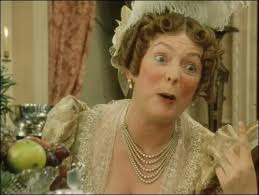
Mrs. Bennet: Mrs. Bennet has one of the most baldly stated and consistent personal goals of any character in literature--she wants to get her daughters married. Her engagement in this task is high. She thinks and talks of little else. But what about abilities? Here she flounders--most of what she does in hopes of furthering her goal works against it and, most damning of all, she never notices. Her blatant and empty-headed speech, her bad manners, her nurturing of Lydia's wildness, nearly scare off the truly eligible. It is in spite of her that her older daughters get married at all. Therefore, we must concur that by this definition (as by nearly any other), Mrs. Bennet is of low intelligence.

Mr. Collins: Now, Elizabeth describes Mr. Collins as "the stupidest man in all England," but is this fair? What is his personal goal? A respectable and comfortable living. What abilities does he engage to achieve this goal? Blatant and unrelenting flattery of Lady Catherine. It may not be a particularly noble goal, but it is certainly one he is fully engaged in and he knows very well how to use his abilities to achieve it. However, it does not require much adjustment or growth to continue achieving, so, although we cannot concur with Elizabeth that he is the stupidest man in England, we do not need to rate his intelligence very highly.

Darcy: Darcy's goal, at least as it evolves through the book, is to win Elizabeth. He starts out on completely the wrong tack, of course. However--here is the great point--he recognizes what doesn't work and tries again with something else. Abandoning the method of insulting her family and presuming any woman would accept him (and as one of the richest men in England and looking like Colin Firth, it was not necessarily an empty presumption), he remains fully engaged with his goal but tries civility, hospitality, humility, and using his money to get her family out of a terrible jam without presuming anything in return. It's a brilliant change of strategy, and when you combine it with the less-prominent but still obvious in the background abilities he uses to manage his personal business, it is evident that Mr. Darcy is a very intelligent man.
Elizabeth: I admit, I'm rather challenged here. Obviously Elizabeth is intelligent, but how is it manifested? What is her goal? (And if one of the most beloved protagonists in English literature doesn't have a clear goal, what does *that* say about writing truisms?) Marriage is not really her goal. Mostly she seems to want to observe and understand people and avoid being excessively embarrassed by her family, but the latter is one she cannot do much about. She does exercise her abilities extensively and in varying ways in coming to understand more about other people, but somehow it just doesn't seem to capture enough. I feel like either the definition of intelligence or my understanding of her motivations are too weak here.
Edited to add: Perhaps I have it. I think Elizabeth states her goal to Lady Catherine: to secure her own happiness. Stated as that, it seems a rather selfish and narrow goal, but I think Elizabeth's choices and behavior indicate that she means it in the broadest and best possible sense: to live well; to attain happiness through virtue and wisdom. The philosophers would approve. And part of pursuing that goal is observing and learning from others; part finding out her own wishes; part simply learning to enjoy and make the best of the moment she is in, even if it is at a ball with too few men. She remains engaged, flexible, creative, and charming in her pursuit of a worthy goal. Intelligent indeed.

Wickham: Mr. Wickham's goals appear to be to get as much money and as many girls as possible. Unfortunately, since he plans to marry for money, his two goals are in conflict, but he drifts along trying to accomplish them both. His failure to see the conflict clearly and hew to one course or the other marks him as considerably less intelligent than he manages to convey at first blush.
Lydia: Lydia appears to have but one goal, she is fully engaged in pursuing it, and she achieves it. That her goal is quite limited in scope and very easy to accomplish for an uninhibited 16 year old girl at a military encampment in any era prevents us from forming a very high estimation about her intelligence even so.
After evaluating these characters, I do think the definition has potential, as long as you allow for the intensity of abilities needed to pursue a goal--successful pursuit of goal that is easily achieved cannot indicate as much intelligence as even failing at a difficult one. Worthiness of the goal is another concern, but not strictly an intelligence one--obviously an evil mastermind will have unworthy goals, but that does not indicate he is unintelligent in his manner of pursuit.
Ungifted: Intelligence Redefined, by Scott Barry Kaufman--a book on the ways schools and society define, measure, and predict intelligence. I've been reading it slowly for the past few months and finished it at the library at the end of its renewals.
Pride and Prejudice, by Jane Austen--which needs no explanation, and which I was rereading for the umpty-eleventh time after watching the 6 hour miniseries, because even 6 hours has to leave out so many good lines.
Ungifted was particularly interesting because it was written by a man who spent most of his childhood in special ed due to a delay in language processing, yet who went on to become a cognitive psychologist. His look at the limited and self-fulfilling nature of intelligence testing and classification is therefore both deeply personal and thoroughly supported. The book examines many of the variables that go into achievement independently of intelligence (such as grit and passion); the obvious limits of many gifted programs that base massive outcomes on the strength of a single test at a young age; and looks at what intelligence tests are good at (predicting overall scholastic outcomes) while questioning whether that is really measuring intelligence or just shows that school is tailored to a few factors. If there was anything that disappointed me, it was that he didn't come to proposing his *own*, broader definition of intelligence until the very end of the book.
However, here it is: "Intelligence is the dynamic interplay of engagement and abilities in pursuit of personal goals." This is a pretty intriguing starting place, and I immediately thought of the people in the P&P world: How would their intelligence be evaluated by this standard?
Mrs. Bennet: Mrs. Bennet has one of the most baldly stated and consistent personal goals of any character in literature--she wants to get her daughters married. Her engagement in this task is high. She thinks and talks of little else. But what about abilities? Here she flounders--most of what she does in hopes of furthering her goal works against it and, most damning of all, she never notices. Her blatant and empty-headed speech, her bad manners, her nurturing of Lydia's wildness, nearly scare off the truly eligible. It is in spite of her that her older daughters get married at all. Therefore, we must concur that by this definition (as by nearly any other), Mrs. Bennet is of low intelligence.

Mr. Collins: Now, Elizabeth describes Mr. Collins as "the stupidest man in all England," but is this fair? What is his personal goal? A respectable and comfortable living. What abilities does he engage to achieve this goal? Blatant and unrelenting flattery of Lady Catherine. It may not be a particularly noble goal, but it is certainly one he is fully engaged in and he knows very well how to use his abilities to achieve it. However, it does not require much adjustment or growth to continue achieving, so, although we cannot concur with Elizabeth that he is the stupidest man in England, we do not need to rate his intelligence very highly.
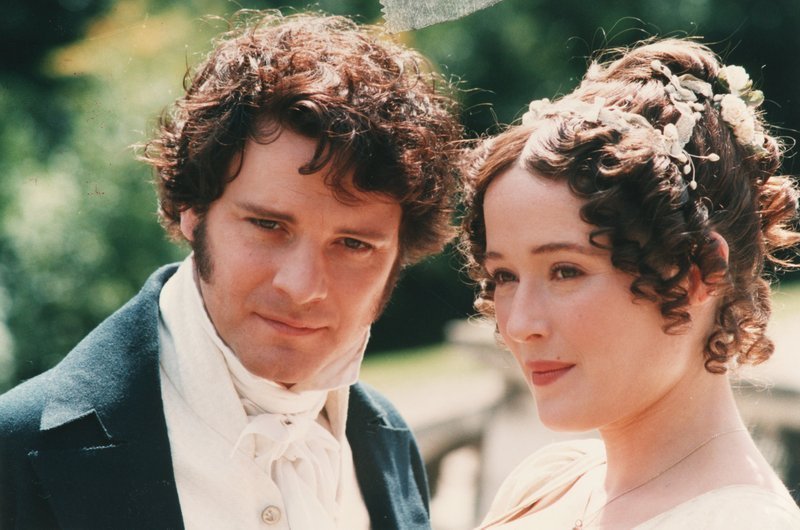
Darcy: Darcy's goal, at least as it evolves through the book, is to win Elizabeth. He starts out on completely the wrong tack, of course. However--here is the great point--he recognizes what doesn't work and tries again with something else. Abandoning the method of insulting her family and presuming any woman would accept him (and as one of the richest men in England and looking like Colin Firth, it was not necessarily an empty presumption), he remains fully engaged with his goal but tries civility, hospitality, humility, and using his money to get her family out of a terrible jam without presuming anything in return. It's a brilliant change of strategy, and when you combine it with the less-prominent but still obvious in the background abilities he uses to manage his personal business, it is evident that Mr. Darcy is a very intelligent man.
Elizabeth: I admit, I'm rather challenged here. Obviously Elizabeth is intelligent, but how is it manifested? What is her goal? (And if one of the most beloved protagonists in English literature doesn't have a clear goal, what does *that* say about writing truisms?) Marriage is not really her goal. Mostly she seems to want to observe and understand people and avoid being excessively embarrassed by her family, but the latter is one she cannot do much about. She does exercise her abilities extensively and in varying ways in coming to understand more about other people, but somehow it just doesn't seem to capture enough. I feel like either the definition of intelligence or my understanding of her motivations are too weak here.
Edited to add: Perhaps I have it. I think Elizabeth states her goal to Lady Catherine: to secure her own happiness. Stated as that, it seems a rather selfish and narrow goal, but I think Elizabeth's choices and behavior indicate that she means it in the broadest and best possible sense: to live well; to attain happiness through virtue and wisdom. The philosophers would approve. And part of pursuing that goal is observing and learning from others; part finding out her own wishes; part simply learning to enjoy and make the best of the moment she is in, even if it is at a ball with too few men. She remains engaged, flexible, creative, and charming in her pursuit of a worthy goal. Intelligent indeed.

Wickham: Mr. Wickham's goals appear to be to get as much money and as many girls as possible. Unfortunately, since he plans to marry for money, his two goals are in conflict, but he drifts along trying to accomplish them both. His failure to see the conflict clearly and hew to one course or the other marks him as considerably less intelligent than he manages to convey at first blush.
Lydia: Lydia appears to have but one goal, she is fully engaged in pursuing it, and she achieves it. That her goal is quite limited in scope and very easy to accomplish for an uninhibited 16 year old girl at a military encampment in any era prevents us from forming a very high estimation about her intelligence even so.
After evaluating these characters, I do think the definition has potential, as long as you allow for the intensity of abilities needed to pursue a goal--successful pursuit of goal that is easily achieved cannot indicate as much intelligence as even failing at a difficult one. Worthiness of the goal is another concern, but not strictly an intelligence one--obviously an evil mastermind will have unworthy goals, but that does not indicate he is unintelligent in his manner of pursuit.
Monday, August 11, 2014
What We Did on Our Summer Vacations
DOB: Constructed the LEGO Tower of Orthanc. Slept in very late. Tidied up his alcove. Went swimming in a nice, clean pool.
Me: Read several frivolous books and laughed very hard. Organized and decorated the master bedroom and bathroom. Took long walks. Avoided cooking, mostly.
DOB and Me: Watched the Lord of the Rings Director's Cut (12 hours in one day). Watched Firefly and Serenity. Watched the 1995 Pride and Prejudice. Ate brownies and ice cream. Played Scrabble and cribbage.
Ducklings: Met new friends. Swam in lakes. Various lakes. (His Majesty had the bright idea that the lake next to their house, which had been closed due to contamination earlier in the summer, would be the best lake to swim in since (1) the water quality would be closely monitored; (2) no one else would be there. So far everyone has been in excellent health, and Duchess and Deux have reputedly both learned to actually swim.) Performed dinner theater on the garden wall (lots of sword fights and falling).
It was, in short, a very lovely and relaxing time for all of us, if somewhat lacking in the exciting adventure department, and the only fault Duchess had to find with it as a summer vacation was the lack of spending money (which, as DOB pointed out, would have been to little purpose since they didn't go anywhere to spend it). I'm feeling a lot less brittle than I was. DOB is coming to where he can honestly take stock of how much energy he has and what his limits are.
Me: Read several frivolous books and laughed very hard. Organized and decorated the master bedroom and bathroom. Took long walks. Avoided cooking, mostly.
DOB and Me: Watched the Lord of the Rings Director's Cut (12 hours in one day). Watched Firefly and Serenity. Watched the 1995 Pride and Prejudice. Ate brownies and ice cream. Played Scrabble and cribbage.
Ducklings: Met new friends. Swam in lakes. Various lakes. (His Majesty had the bright idea that the lake next to their house, which had been closed due to contamination earlier in the summer, would be the best lake to swim in since (1) the water quality would be closely monitored; (2) no one else would be there. So far everyone has been in excellent health, and Duchess and Deux have reputedly both learned to actually swim.) Performed dinner theater on the garden wall (lots of sword fights and falling).
It was, in short, a very lovely and relaxing time for all of us, if somewhat lacking in the exciting adventure department, and the only fault Duchess had to find with it as a summer vacation was the lack of spending money (which, as DOB pointed out, would have been to little purpose since they didn't go anywhere to spend it). I'm feeling a lot less brittle than I was. DOB is coming to where he can honestly take stock of how much energy he has and what his limits are.
Wednesday, August 06, 2014
In Which I Face My Fears
Although our new house has many wonderful advantages, it has two main drawbacks. One, of course, is the size of the mortgage payment.
The other one is the yard.
We have always lived in places with very small yards, and back when the big kids were babes in arms whom I could not safely leave unsupervised while I turned on a slathering beast of a gasoline-powered mower (something I never got the hang of), I got a little push mower which never needed the gas refilled nor had difficulty starting. It made a pleasant soft clattering noise and didn't smell at all and I could use it in perfect safety with infants playing close by. Indeed, as soon as they grew tall enough to hold up the handle, they could take a turn with it themselves.
Then we moved here. At some point a predecessor in title had looked at the lovely indigenous forest, which still stands in large swatches throughout the neighborhood, full of fir and cedar and huckleberry and salal and fern, all self-maintaining and some of it quite tasty, and decided they would rather see the sky occasionally.
So we have nearly an acre of mangy grass, dandelions, plantain and a few more sinister and prickly weeds. There's a small yard up front that is pretty much pure grass and easy to maintain. But the back is a steep and gravelly hill which takes better to weeds than grass. And there is an awful lot of it. One look at the size of it and I passed my beloved little push mower on to Wondergirl, who had just moved into a development with tiny, grassy yards.
That left us the problem of mowing. It was intended that we would eventually get one of Grandpa's lawn tractors, but of course that took time and arrangement and meanwhile the grass and weeds grew as grass does in the springtime and DOB sneezed as he does when the grass grows in the springtime. The neighbor took pity on us and mowed it once and some people from church did it another time, and B5 started to mow once after we got Grandpa's mower delivered, but then it broke down and took some time to get it fixed. And then DOB's father was out and he mowed it while they were here.
Eventually, though, the mower was fixed and no one else was around there really wasn't any good reason why I, myself, should not do the mowing instead of begging it done elsewhere. Except that I couldn't for the life of me figure out how to run the thing. Not that I had never done it before--Grandpa taught both Toolboy and I to run the tractor as soon as our legs were long enough. But that was a long time ago, and I have a natural antipathy to machinery as strong as Toolboy's natural affinity for it. (It's not a gender expectations thing; I was just as terrified of Grandma's sewing machine.)
I debated calling up someone for instructions, but it was embarrassing and I am terrible at following instructions anyway. I turned to Google instead and found a page entitled, "How To Start a Riding Lawn Mower." Those instructions didn't make sense, but I printed them out and took them with me to the mower. I was unable to identify any of the parts I was supposed to do things to except the brake and the key, but I put my foot on the brake and turned the key several times and much to my wonder, the thing started.
Indeed, it was very excited to start and began tearing around the yard at an alarming speed, belching fumes. After a while I began to get the hang of it, and then I noticed that it wasn't actually cutting anything. More experiments with everything that could be prodded in one direction or another and I found the lever that turned on the blade. I was actually mowing! And after a while I discovered where to move something else so that I could move at a reasonable pace. Indeed, the only thing I never did figure out was how to work the parking brake, but that was only a problem once when I ran out of gas on the uphill slope. And it didn't make it all the way to the pond, so no harm done.
Thus I tamed the mighty beast and conquered the lawn and felt very proud of myself. I'd still much rather have woods, but unfortunately letting it return to woods on its own would mean putting up with twenty years of blackberries and scotch broom first.
The other one is the yard.
We have always lived in places with very small yards, and back when the big kids were babes in arms whom I could not safely leave unsupervised while I turned on a slathering beast of a gasoline-powered mower (something I never got the hang of), I got a little push mower which never needed the gas refilled nor had difficulty starting. It made a pleasant soft clattering noise and didn't smell at all and I could use it in perfect safety with infants playing close by. Indeed, as soon as they grew tall enough to hold up the handle, they could take a turn with it themselves.
Then we moved here. At some point a predecessor in title had looked at the lovely indigenous forest, which still stands in large swatches throughout the neighborhood, full of fir and cedar and huckleberry and salal and fern, all self-maintaining and some of it quite tasty, and decided they would rather see the sky occasionally.
So we have nearly an acre of mangy grass, dandelions, plantain and a few more sinister and prickly weeds. There's a small yard up front that is pretty much pure grass and easy to maintain. But the back is a steep and gravelly hill which takes better to weeds than grass. And there is an awful lot of it. One look at the size of it and I passed my beloved little push mower on to Wondergirl, who had just moved into a development with tiny, grassy yards.
That left us the problem of mowing. It was intended that we would eventually get one of Grandpa's lawn tractors, but of course that took time and arrangement and meanwhile the grass and weeds grew as grass does in the springtime and DOB sneezed as he does when the grass grows in the springtime. The neighbor took pity on us and mowed it once and some people from church did it another time, and B5 started to mow once after we got Grandpa's mower delivered, but then it broke down and took some time to get it fixed. And then DOB's father was out and he mowed it while they were here.
Eventually, though, the mower was fixed and no one else was around there really wasn't any good reason why I, myself, should not do the mowing instead of begging it done elsewhere. Except that I couldn't for the life of me figure out how to run the thing. Not that I had never done it before--Grandpa taught both Toolboy and I to run the tractor as soon as our legs were long enough. But that was a long time ago, and I have a natural antipathy to machinery as strong as Toolboy's natural affinity for it. (It's not a gender expectations thing; I was just as terrified of Grandma's sewing machine.)
I debated calling up someone for instructions, but it was embarrassing and I am terrible at following instructions anyway. I turned to Google instead and found a page entitled, "How To Start a Riding Lawn Mower." Those instructions didn't make sense, but I printed them out and took them with me to the mower. I was unable to identify any of the parts I was supposed to do things to except the brake and the key, but I put my foot on the brake and turned the key several times and much to my wonder, the thing started.
Indeed, it was very excited to start and began tearing around the yard at an alarming speed, belching fumes. After a while I began to get the hang of it, and then I noticed that it wasn't actually cutting anything. More experiments with everything that could be prodded in one direction or another and I found the lever that turned on the blade. I was actually mowing! And after a while I discovered where to move something else so that I could move at a reasonable pace. Indeed, the only thing I never did figure out was how to work the parking brake, but that was only a problem once when I ran out of gas on the uphill slope. And it didn't make it all the way to the pond, so no harm done.
Thus I tamed the mighty beast and conquered the lawn and felt very proud of myself. I'd still much rather have woods, but unfortunately letting it return to woods on its own would mean putting up with twenty years of blackberries and scotch broom first.
Monday, August 04, 2014
You've (not) Come a Long Way, Baby Weight
Several eons ago in internet time--last month, maybe--Facebook was filled with a happy little meme on the theme of "Let's End the Mommy Wars," with women holding various signs showing that they can be friends despite different parenting styles and achievements.
Being the sort of person I am, I can hardly let such harmony and goodwill go uncriticized. So I'd like to hone in on one of the pictures, the one where one mom is holding a sign that says, "I lost all my baby weight," and the other mom is holding a sign that says, "I'm still working on losing the baby weight."
In other words, guess what is still *not* an acceptable option in this love fest of moms who do and don't breastfeed, co-sleep and eat organic? That's right--it's not caring about the baby weight. You don't have to lose the baby weight, necessarily, but you have to *try.* If you cannot return your body to its mythical pre-baby state, you at the very least should have the decency to feel badly about it.
(And before someone starts droning on about the Serious Public Health Problem of Obesity, let me point out that the mom holding the "I'm still trying" sign is not, by the most extravagant stretch of the imagination, fat in any way that threatens her health or even would be noticeable to another human being. It's the scale and the idealization of the Pre-Baby Body that is driving her quest.)
In the interest of honesty, let me say that I am, by the official government numbers, overweight. I never lost the baby weight, and carrying twins full term packs on a good bit. I breastfed for a year, I eat a well-balanced diet of whole foods, and I exercise moderately but regularly because I like to. Doesn't make a difference. This is the weight I am (I'm not going to say a number because comparisons are exactly the thing I'm trying to get away from here) and, barring extravagant measures, this is where I'm going to stay.
Yes, I'm noticeably heavier than I was pre-children. I also don't melt down into a screaming lunatic at 5 p.m. if I haven't eaten. Or need to take a nap in the morning despite an uninterrupted night's sleep and working at a desk. In other words, I'm healthier and stronger. And heavier and bigger around. (Ironically, although it never bothered me much, I really did think I was on the chunky side back in those days, when any sane person could, and sometimes did, tell me I was borderline emaciated. My family runs to large bones and dense muscles and the BMI doesn't really apply.)
Increasing stoutness with middle age, and especially with child-bearing, is not, after all, anything new or tied to our evil modern lifestyle. It's the normal human condition, in settings with adequate food. There are always a few naturally slim folk who avoid it, but it is not especially virtuous or healthy to try to dodge it if you aren't one of those. (And I'm not going to call them lucky. They're not luckier, they're just different. There are tradeoffs to everything. As you get old--which I'm sure we all want to do, given the alternative--less fat just means more wrinkles.)
If we really are seriously concerned about problematic obesity, then the *last* thing we should be doing is encouraging mothers to worry about how their body will look after the baby. Because restricting a mother's diet before the baby is born sets the child up for metabolic syndrome and truly serious weight problems.
It's good to encourage people to eat a healthy, well-balanced diet and to exercise regularly, because those things really are beneficial. But they won't necessarily make you thin, especially not if you've been through an event that may have reset your base weight, like pregnancy. It's important to be honest about that. As soon as thinness becomes the goal, people start being lured into diets and exercise programs that are not really healthy and not really sustainable.
Please don't tell me about how you have found the one common-sense dietary program that really works. In five years it will be discredited and you yourself will have forgotten about it. They always are. They all boil down to some combination of (1) not eating specific kinds of food; (2) not eating enough food; (3) not eating often enough; (4) following rules for eating so complicated that it's just too much trouble. All of those have problems in the long run.
And exercise is fine, but intense programs that lead to injury and then inactivity are not good for your long-term health. Better to do something moderate and unimpressive (but fun) that you can keep doing for the next 50 years.
Guess what? It probably won't make you thin. It will help you live longer and leave you free to laugh and enjoy the time you have and eat ice cream occasionally without making a big deal about it.
Being the sort of person I am, I can hardly let such harmony and goodwill go uncriticized. So I'd like to hone in on one of the pictures, the one where one mom is holding a sign that says, "I lost all my baby weight," and the other mom is holding a sign that says, "I'm still working on losing the baby weight."
In other words, guess what is still *not* an acceptable option in this love fest of moms who do and don't breastfeed, co-sleep and eat organic? That's right--it's not caring about the baby weight. You don't have to lose the baby weight, necessarily, but you have to *try.* If you cannot return your body to its mythical pre-baby state, you at the very least should have the decency to feel badly about it.
(And before someone starts droning on about the Serious Public Health Problem of Obesity, let me point out that the mom holding the "I'm still trying" sign is not, by the most extravagant stretch of the imagination, fat in any way that threatens her health or even would be noticeable to another human being. It's the scale and the idealization of the Pre-Baby Body that is driving her quest.)
In the interest of honesty, let me say that I am, by the official government numbers, overweight. I never lost the baby weight, and carrying twins full term packs on a good bit. I breastfed for a year, I eat a well-balanced diet of whole foods, and I exercise moderately but regularly because I like to. Doesn't make a difference. This is the weight I am (I'm not going to say a number because comparisons are exactly the thing I'm trying to get away from here) and, barring extravagant measures, this is where I'm going to stay.
Yes, I'm noticeably heavier than I was pre-children. I also don't melt down into a screaming lunatic at 5 p.m. if I haven't eaten. Or need to take a nap in the morning despite an uninterrupted night's sleep and working at a desk. In other words, I'm healthier and stronger. And heavier and bigger around. (Ironically, although it never bothered me much, I really did think I was on the chunky side back in those days, when any sane person could, and sometimes did, tell me I was borderline emaciated. My family runs to large bones and dense muscles and the BMI doesn't really apply.)
Increasing stoutness with middle age, and especially with child-bearing, is not, after all, anything new or tied to our evil modern lifestyle. It's the normal human condition, in settings with adequate food. There are always a few naturally slim folk who avoid it, but it is not especially virtuous or healthy to try to dodge it if you aren't one of those. (And I'm not going to call them lucky. They're not luckier, they're just different. There are tradeoffs to everything. As you get old--which I'm sure we all want to do, given the alternative--less fat just means more wrinkles.)
If we really are seriously concerned about problematic obesity, then the *last* thing we should be doing is encouraging mothers to worry about how their body will look after the baby. Because restricting a mother's diet before the baby is born sets the child up for metabolic syndrome and truly serious weight problems.
It's good to encourage people to eat a healthy, well-balanced diet and to exercise regularly, because those things really are beneficial. But they won't necessarily make you thin, especially not if you've been through an event that may have reset your base weight, like pregnancy. It's important to be honest about that. As soon as thinness becomes the goal, people start being lured into diets and exercise programs that are not really healthy and not really sustainable.
Please don't tell me about how you have found the one common-sense dietary program that really works. In five years it will be discredited and you yourself will have forgotten about it. They always are. They all boil down to some combination of (1) not eating specific kinds of food; (2) not eating enough food; (3) not eating often enough; (4) following rules for eating so complicated that it's just too much trouble. All of those have problems in the long run.
And exercise is fine, but intense programs that lead to injury and then inactivity are not good for your long-term health. Better to do something moderate and unimpressive (but fun) that you can keep doing for the next 50 years.
Guess what? It probably won't make you thin. It will help you live longer and leave you free to laugh and enjoy the time you have and eat ice cream occasionally without making a big deal about it.
Saturday, August 02, 2014
Remembering
These are old pictures, from 2012. We had a photographer friend come and take a whole series of them, and they were beautiful. Somehow she managed to make our weedy backyard look like a fairyland and a broken bench look like a deliberate prop. At the time I was a little uncomfortable with the pictures. They felt dishonest. It had been a rough summer. I had sprained my foot in a way that persisted in not healing, and that had put too much strain on DOB. DOB was beginning to feel the cumulative effects of life on his feet in such a way that his beloved Camaro would have to be sold in the next month so that he could buy a truck and start using a wheelchair full time. And that, in turn, precipitated a whole series of changes that still have us reeling and trying to find solid ground under our feet. It hadn't all happened yet that summer, but we could feel it coming.
 Looking back on that year and those pictures, I realize they weren't dishonest. Our weedy backyard was a fairyland. DOB only got to enjoy his Camaro for a couple of months, but he did have it. The bad things happening were true, but so was the beauty. And I am glad we stopped to notice it. Because what do we have in life, at the end, but a few memories? And if we are lucky, we have held on to the beautiful ones.
A week ago Duchess and Deux finished up the drama workshop they like to do in the summers. It had a science-fiction theme, and they together played two heads of a three-headed monster; Deux was also a sample body for a mad scientist and Duchess a talking dog. We thoroughly enjoyed the show and then we went and got ice cream cones for everyone at Carter's, whose peppermint chip ice cream is otherworldly.
With a little difficulty about curbs--because fewer places are ADA compliant than you might think--we took our cones to a little gazebo by the water, where we watched dusk falling over the harbor in the soft coolness of the summer evening. It was a beautiful moment. It didn't make the worries about health and life and work and money go away, but nothing does. Life keeps needing to be lived. But it keeps bringing beautiful moments, too. And that is why we have words and pictures and hearts, to stop and take notice and hold onto those moments.

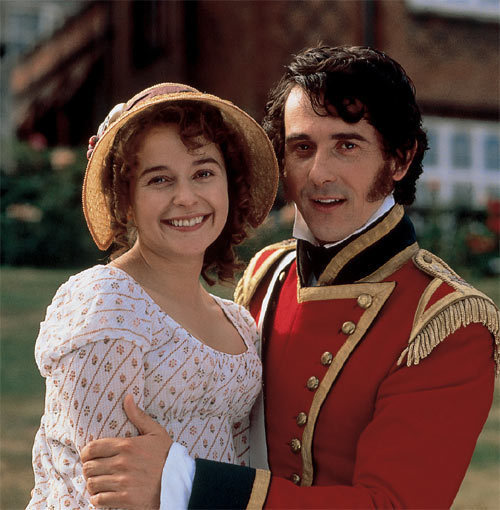
A week ago Duchess and Deux finished up the drama workshop they like to do in the summers. It had a science-fiction theme, and they together played two heads of a three-headed monster; Deux was also a sample body for a mad scientist and Duchess a talking dog. We thoroughly enjoyed the show and then we went and got ice cream cones for everyone at Carter's, whose peppermint chip ice cream is otherworldly.
With a little difficulty about curbs--because fewer places are ADA compliant than you might think--we took our cones to a little gazebo by the water, where we watched dusk falling over the harbor in the soft coolness of the summer evening. It was a beautiful moment. It didn't make the worries about health and life and work and money go away, but nothing does. Life keeps needing to be lived. But it keeps bringing beautiful moments, too. And that is why we have words and pictures and hearts, to stop and take notice and hold onto those moments.
Wednesday, July 30, 2014
Full Stop
We still don't seem to be any closer to answers on what's going on with DOB. He still has episodes of paralysis, especially after stress or exertion. The neurologist thinks it must be psychological and the psychiatrist thinks it must be neurological. He tried driving once and found it too draining so he is back to the passenger seat, an unpleasant situation for both of us. We're going to try to talk to more neurologists and do more tests, but getting anything scheduled is on a scale of months.
In the meantime, one thing that seems clear is that whether or not it is entirely caused by exhaustion or not, it is certainly heavily correlated to exhaustion. And a break is something that DOB hasn't really taken . . . well, ever, except for an overnighter here and there. We haven't even had a good bout of the flu in over a year. And between trying to keep DOB and his law practice propped up while dealing with four kids and a house and a move and an estate, I was pretty near the cracking point myself.
So, thanks to Wondergirl and Their Majesties for taking the kids for several days each, we are taking a long break. (Unfortunately, it means we are also missing B3's wedding, but there was no way we were in condition to travel 3000 miles.) We're not going anywhere (except places like the chiropractor and Papa Murphy's). We're not making any plans. We're not doing much of anything. So far I've read three completely frivolous novels, finished beating all the encounters in Magic 2015, and started writing a science-fiction story based on Greek mythology. DOB has slept in very, very late, reached the next level in his game, and gotten halfway through rearranging his hot wheels. We're watching Crusade in the evenings, an offshoot of our all-time favorite Babylon 5.
It's nice. I'm still tired. But a little less frantically tired.
In the meantime, one thing that seems clear is that whether or not it is entirely caused by exhaustion or not, it is certainly heavily correlated to exhaustion. And a break is something that DOB hasn't really taken . . . well, ever, except for an overnighter here and there. We haven't even had a good bout of the flu in over a year. And between trying to keep DOB and his law practice propped up while dealing with four kids and a house and a move and an estate, I was pretty near the cracking point myself.
So, thanks to Wondergirl and Their Majesties for taking the kids for several days each, we are taking a long break. (Unfortunately, it means we are also missing B3's wedding, but there was no way we were in condition to travel 3000 miles.) We're not going anywhere (except places like the chiropractor and Papa Murphy's). We're not making any plans. We're not doing much of anything. So far I've read three completely frivolous novels, finished beating all the encounters in Magic 2015, and started writing a science-fiction story based on Greek mythology. DOB has slept in very, very late, reached the next level in his game, and gotten halfway through rearranging his hot wheels. We're watching Crusade in the evenings, an offshoot of our all-time favorite Babylon 5.
It's nice. I'm still tired. But a little less frantically tired.
Sunday, July 27, 2014
Thinking, Fast and Slow, by Daniel Kahneman
Really the title only properly describes the first two-thirds of the book, which delves into the differences between the intuitive, snap judgments our minds make and the slower, rational processes. This brought together many different but related issues, such as how much basic presentation techniques affect persuasiveness, since the brain tends to perceive something easy as true; or how powerful hearing only one side of a case is, even if the facts are relatively neutral; or how people's perception of risk is drastically skewed by what comes easily to mind.
One of the more intriguing aspects was the limitations of expert knowledge. Or, more properly, the limitations of expert prediction. Prediction in general tends to happen by a cognitive slip--we substitute an evaluation of what we know now (e.g. current grades) when asked to predict the future (e.g. how a student will do in college). And experts really don't do any better than that--they go with their gut. But the future is too variable to fit well with predictions, and guts, whether layperson or expert, don't allow for the statistical limitations of their knowledge. Which is why financial gurus will be quite, quite certain about their stock picks, even though, statistically, they are no better at it than monkeys with darts.
Not to say every expert snap judgment is unreliable--but generally, they are better at recognizing and assessing what is (i.e. Is this a forgery?) than what will be (i.e. Will this criminal be a repeat offender?) The quicker and more definitive the feedback, the more likely that the judgments will reflect reality. In general, in making long-range predictions, numbers and averages are more effective than experts, but experts themselves seldom believe that.
There's also an extensive section on how the humans of reality differ from the ideal, profit-maximizing entities of economic theory. Humans value things differently based on whether they currently have them or not, fear loss far more than they desire equivalent gains, and, perhaps most intriguingly, find a loss from an unusual activity far more grievous than one that occurs in routine. (This may explain the harsh reaction to parents who allow grade-school children to be unsupervised, which is no longer a "normal" activity, even though the risks to the children of driving them around are drastically higher, and nobody bats an eye at that.)
I found the final section the most fascinating, however. It looks at humans as two selves: the present, experiencing self, and the self that remembers what has happened. These two are often at odds. For instance, when observing our present experience, we would prefer misery to end quickly and pleasure to go on for a long time. But when it comes to how we actually look back, we ignore duration and only remember the moments: the highs, the lows, and how it all ended. And so our actual experience of life doesn't necessarily match up with our personal assessment of it.
We may be happy day to day but assess our lives as difficult because an unpleasant recent event looms large in our thoughts (or vice versa life may be going on much as normal but a recent achievement raises our satisfaction level). We get used to most things, and so they stop affecting our happiness level--a change in climate or health or wealth. More money does make life more pleasant up to a point, but after that there's no gain in daily happiness--but if money was your goal, it can still increase your overall life satisfaction. (He didn't mention it, but I'm betting it works the same way with more personal goals, like marriage and children.)
Anyway, quite a fascinating book and one that would definitely be beneficial reading for anyone who wants to pay more attention to the choices and judgments they make.
One of the more intriguing aspects was the limitations of expert knowledge. Or, more properly, the limitations of expert prediction. Prediction in general tends to happen by a cognitive slip--we substitute an evaluation of what we know now (e.g. current grades) when asked to predict the future (e.g. how a student will do in college). And experts really don't do any better than that--they go with their gut. But the future is too variable to fit well with predictions, and guts, whether layperson or expert, don't allow for the statistical limitations of their knowledge. Which is why financial gurus will be quite, quite certain about their stock picks, even though, statistically, they are no better at it than monkeys with darts.
Not to say every expert snap judgment is unreliable--but generally, they are better at recognizing and assessing what is (i.e. Is this a forgery?) than what will be (i.e. Will this criminal be a repeat offender?) The quicker and more definitive the feedback, the more likely that the judgments will reflect reality. In general, in making long-range predictions, numbers and averages are more effective than experts, but experts themselves seldom believe that.
There's also an extensive section on how the humans of reality differ from the ideal, profit-maximizing entities of economic theory. Humans value things differently based on whether they currently have them or not, fear loss far more than they desire equivalent gains, and, perhaps most intriguingly, find a loss from an unusual activity far more grievous than one that occurs in routine. (This may explain the harsh reaction to parents who allow grade-school children to be unsupervised, which is no longer a "normal" activity, even though the risks to the children of driving them around are drastically higher, and nobody bats an eye at that.)
I found the final section the most fascinating, however. It looks at humans as two selves: the present, experiencing self, and the self that remembers what has happened. These two are often at odds. For instance, when observing our present experience, we would prefer misery to end quickly and pleasure to go on for a long time. But when it comes to how we actually look back, we ignore duration and only remember the moments: the highs, the lows, and how it all ended. And so our actual experience of life doesn't necessarily match up with our personal assessment of it.
We may be happy day to day but assess our lives as difficult because an unpleasant recent event looms large in our thoughts (or vice versa life may be going on much as normal but a recent achievement raises our satisfaction level). We get used to most things, and so they stop affecting our happiness level--a change in climate or health or wealth. More money does make life more pleasant up to a point, but after that there's no gain in daily happiness--but if money was your goal, it can still increase your overall life satisfaction. (He didn't mention it, but I'm betting it works the same way with more personal goals, like marriage and children.)
Anyway, quite a fascinating book and one that would definitely be beneficial reading for anyone who wants to pay more attention to the choices and judgments they make.
Friday, July 18, 2014
Too Hot To Hoot
It's been July, which means Grandparent Visit and Fourth of July, and then we had our annual heatwave of temperatures above 85, when we wonder if it would really be worth it to get air conditioning. (And it lasted six days this year, which is pretty much forever.) That's sapped all my mental energy, so all my brilliant thoughts in the last month have been lost.
The dryer broke, but since it was in the middle of the heat wave it didn't matter. We have a lot of deck rail and a small folding rack and fortunately the worst of grass allergy season is over. Today it is cooler and looks like rain, but Techboy brought over Gramps' old dryer, which is ancient but still seems to be working.
We had a great visit with the DOB's parents. Well, mostly they spent a lot of time doing fun projects with the ducklings while I went in to help DOB at the office. But, as DOB is supposed to be working only two days a week (he's trying, but it's hard), it was most helpful, and they all read The Wheel on the School and painted a lot of t-shirts.
Most of the children got older. The twins are six now, and Duchess is ten. It is alarming. Deux, as usual, struggles with being the only one whose birthday is not within a three-week window. He asks why his birthday is in September, a question that is difficult to answer. We got him his main birthday present early to distract him. We'll see if he remembers that come September.
I've been planning school and realized, thanks to using Ambleside Online, perennially collecting books, and using free math programs, I only needed to buy one book this year, a biography of Abigail Adams. That was just too easy, so I got a CD version of Robinson Crusoe and a graphic novel version of A Midsummer Night's Dream. Even so, I spent more on restocking our school supplies.
We're reading Swallows and Amazons, which is the perfect summertime read. Unfortunately we cannot spend the summer camping on an island and sailing around in a sailboat and swimming in the lake three times a day, which sounds like the best possible way to spend one's life, but we do manage to go swimming in lakes every other week or so. We found a new one, a semi-abandoned state park only ten minutes away.
It has not been too hot to read. It is never too hot to read, it's just a question of finding the right book. I read some Muriel Spark books--they're rather bitter around the edges, but intriguing and sharp and brief. I'd recommend The Girls of Slender Means if you wanted to give one a try, or Memento Mori (which I actually read a long time ago). I finished Thinking, Fast and Slow, which was quite fascinating and may merit its own post. I reread Cold Comfort Farm, which I ought to do on a regular schedule. I think whenever my life seems to be drowning in misery or drama I should ask myself, "What would Flora do?"
The dryer broke, but since it was in the middle of the heat wave it didn't matter. We have a lot of deck rail and a small folding rack and fortunately the worst of grass allergy season is over. Today it is cooler and looks like rain, but Techboy brought over Gramps' old dryer, which is ancient but still seems to be working.
We had a great visit with the DOB's parents. Well, mostly they spent a lot of time doing fun projects with the ducklings while I went in to help DOB at the office. But, as DOB is supposed to be working only two days a week (he's trying, but it's hard), it was most helpful, and they all read The Wheel on the School and painted a lot of t-shirts.
Most of the children got older. The twins are six now, and Duchess is ten. It is alarming. Deux, as usual, struggles with being the only one whose birthday is not within a three-week window. He asks why his birthday is in September, a question that is difficult to answer. We got him his main birthday present early to distract him. We'll see if he remembers that come September.
I've been planning school and realized, thanks to using Ambleside Online, perennially collecting books, and using free math programs, I only needed to buy one book this year, a biography of Abigail Adams. That was just too easy, so I got a CD version of Robinson Crusoe and a graphic novel version of A Midsummer Night's Dream. Even so, I spent more on restocking our school supplies.
We're reading Swallows and Amazons, which is the perfect summertime read. Unfortunately we cannot spend the summer camping on an island and sailing around in a sailboat and swimming in the lake three times a day, which sounds like the best possible way to spend one's life, but we do manage to go swimming in lakes every other week or so. We found a new one, a semi-abandoned state park only ten minutes away.
It has not been too hot to read. It is never too hot to read, it's just a question of finding the right book. I read some Muriel Spark books--they're rather bitter around the edges, but intriguing and sharp and brief. I'd recommend The Girls of Slender Means if you wanted to give one a try, or Memento Mori (which I actually read a long time ago). I finished Thinking, Fast and Slow, which was quite fascinating and may merit its own post. I reread Cold Comfort Farm, which I ought to do on a regular schedule. I think whenever my life seems to be drowning in misery or drama I should ask myself, "What would Flora do?"
Thursday, June 26, 2014
A-Z Book Questionnaire
This is courtesy Carrie at Reading to Know. I made an effort not to include any author or book more than once, unless absolutely necessary.
Author you’ve read the most books from: This says more about how prolific the author is than my actual favorite. (I mean, Jane Austen only wrote six books. And Chesterton wrote a whole lot, but mostly newspaper articles.) Probably Terry Pratchett, thanks mostly to the inimitable (and apparently interminable) Discworld series.
Best sequel ever: Barchester Towers, by Anthony Trollope
Currently reading: As usual, a very random list
Ungifted, by Scott Kaufman
Thinking, Fast and Slow, by Daniel Kahneman
Code of the Lifemaker, by James P. Hogan
Still working on Paradise Lost, by Milton, and Poetic Knowledge, by James Taylor, but very slowly on each.
Drink of choice while reading: Me having anything liquid near a book is a very, very bad idea.
E-reader or physical book? I definitely prefer physical books, but will happily read anything that has letters on it.
Fictional character you probably would have actually dated in high school: Well, the fictional characters *I* would have wanted to date, probably wouldn't have been willing to date *me*. I take that back. I could probably have had a shot with Henry Tilney, of Northanger Abbey, and he would have been a lot of fun to hang around with, though a little too cheerful for me to take seriously. Which would be just as well in high school.
Glad you gave this book a chance: The Count of Monte Cristo. I had read The Three Musketeers when I was far too young and was completely shocked. (I think I was ten, maybe. Goodness, that's how old Duchess is. No wonder I was shocked!) It took me until just a couple of years ago to get around to giving Dumas a second chance. Glad I did.
Hidden gem book: Kristin Lavransdatter, by Sigrid Undset. Really amazing and wonderful book of the life of a medieval Norwegian woman.
Just finished: My first two ever Georgette Heyer romances. I'm kind of embarrassed, because I never read romances, but they *were* very funny.
Kinds of books you won’t read: Self-help books. Most romances. Devotional or Christian living books. (I will read theology and philosophy, though. Just hate being told what to do. :D)
Longest book you’ve read: War and Peace, most likely. Despite its reputation and length, I loved it. Part of it is because Tolstoy really is amazing at getting inside people's heads. Part of it is because I had a quiet armchair in my bedroom and a big bag of homemade chocolates and a quiet couple of weeks between semesters when I read it.
Major book hangover because of: Hmm . . . what counts as a major book hangover? Do you mean the one where you wander around the house wondering what on earth you are doing in 21st century North America because you could have sworn you were somewhere else? Enchantment, by Orson Scott Card, had that effect on me. But so do a lot of other books. Or, sometimes, the junk mail. I'm kind of easy to distract.
Number of bookcases you own: Eleven, or thirteen, depending on how you count them and what's on them.
One book you have read multiple times: Just one? Alice in Wonderland, by Lewis Carroll.
Preferred place to read: My armchair/cozy corner, with the big end table of books next to it. Happiness.
Quote that you like, from a book you’ve read: "'You are a very fine person, Mr. Baggins, and I am very fond of you; but you are only quite a little fellow in a wide world after all! ‘Thank goodness!’ said Bilbo laughing, and handed him the tobacco jar.” From The Hobbit, by J. R. R. Tolkien.
Reading regret: I never regret reading. I regret that I have to stop and do the dishes.
Series you started and need to finish: I never read under obligation. However, I do plan to read the rest of Jim Butcher's Dresden series at some point.
Three of your all-time favorite books: Orthodoxy, by G. K. Chesterton. The Phantom Tollbooth, by Norton Juster. Pride and Prejudice, by Jane Austen.
Unapologetic fangirl for: G. K. Chesterton!
Very excited for this release more than all the others: I always wait a few years to decide if I want to read something. Thus, I have no idea about releases. I'd like to read another one of Patricia Wrede's western fantasy series. I am getting annoyed by David Weber's Safehold series because it has become way too sprawling, but that won't stop me from reading the next one when it comes out.
Worst bookish habit: Propping books open on their spines. It is very evil.
X marks the spot: When I'm being good, I use my library hold slips, of which I generally have an abundance.
Your latest book purchase: Something for the kids' school (George Washington's World, by Genevieve Foster.) For myself, Poetic Knowledge, by James Taylor. I'm not a frequent purchaser--the librarians all know me by name.
Zzz snatcher book: You mean one I stayed up too late for? Alas, I am too responsible of a grownup to do this anymore. Sometimes in the summer I read early in the morning before DOB wakes up, but I have to avoid sniggering.
Please do post a link if you decide to do it, too!
Author you’ve read the most books from: This says more about how prolific the author is than my actual favorite. (I mean, Jane Austen only wrote six books. And Chesterton wrote a whole lot, but mostly newspaper articles.) Probably Terry Pratchett, thanks mostly to the inimitable (and apparently interminable) Discworld series.
Best sequel ever: Barchester Towers, by Anthony Trollope
Currently reading: As usual, a very random list
Ungifted, by Scott Kaufman
Thinking, Fast and Slow, by Daniel Kahneman
Code of the Lifemaker, by James P. Hogan
Still working on Paradise Lost, by Milton, and Poetic Knowledge, by James Taylor, but very slowly on each.
Drink of choice while reading: Me having anything liquid near a book is a very, very bad idea.
E-reader or physical book? I definitely prefer physical books, but will happily read anything that has letters on it.
Fictional character you probably would have actually dated in high school: Well, the fictional characters *I* would have wanted to date, probably wouldn't have been willing to date *me*. I take that back. I could probably have had a shot with Henry Tilney, of Northanger Abbey, and he would have been a lot of fun to hang around with, though a little too cheerful for me to take seriously. Which would be just as well in high school.
Glad you gave this book a chance: The Count of Monte Cristo. I had read The Three Musketeers when I was far too young and was completely shocked. (I think I was ten, maybe. Goodness, that's how old Duchess is. No wonder I was shocked!) It took me until just a couple of years ago to get around to giving Dumas a second chance. Glad I did.
Hidden gem book: Kristin Lavransdatter, by Sigrid Undset. Really amazing and wonderful book of the life of a medieval Norwegian woman.
Just finished: My first two ever Georgette Heyer romances. I'm kind of embarrassed, because I never read romances, but they *were* very funny.
Kinds of books you won’t read: Self-help books. Most romances. Devotional or Christian living books. (I will read theology and philosophy, though. Just hate being told what to do. :D)
Longest book you’ve read: War and Peace, most likely. Despite its reputation and length, I loved it. Part of it is because Tolstoy really is amazing at getting inside people's heads. Part of it is because I had a quiet armchair in my bedroom and a big bag of homemade chocolates and a quiet couple of weeks between semesters when I read it.
Major book hangover because of: Hmm . . . what counts as a major book hangover? Do you mean the one where you wander around the house wondering what on earth you are doing in 21st century North America because you could have sworn you were somewhere else? Enchantment, by Orson Scott Card, had that effect on me. But so do a lot of other books. Or, sometimes, the junk mail. I'm kind of easy to distract.
Number of bookcases you own: Eleven, or thirteen, depending on how you count them and what's on them.
One book you have read multiple times: Just one? Alice in Wonderland, by Lewis Carroll.
Preferred place to read: My armchair/cozy corner, with the big end table of books next to it. Happiness.
Quote that you like, from a book you’ve read: "'You are a very fine person, Mr. Baggins, and I am very fond of you; but you are only quite a little fellow in a wide world after all! ‘Thank goodness!’ said Bilbo laughing, and handed him the tobacco jar.” From The Hobbit, by J. R. R. Tolkien.
Reading regret: I never regret reading. I regret that I have to stop and do the dishes.
Series you started and need to finish: I never read under obligation. However, I do plan to read the rest of Jim Butcher's Dresden series at some point.
Three of your all-time favorite books: Orthodoxy, by G. K. Chesterton. The Phantom Tollbooth, by Norton Juster. Pride and Prejudice, by Jane Austen.
Unapologetic fangirl for: G. K. Chesterton!
Very excited for this release more than all the others: I always wait a few years to decide if I want to read something. Thus, I have no idea about releases. I'd like to read another one of Patricia Wrede's western fantasy series. I am getting annoyed by David Weber's Safehold series because it has become way too sprawling, but that won't stop me from reading the next one when it comes out.
Worst bookish habit: Propping books open on their spines. It is very evil.
X marks the spot: When I'm being good, I use my library hold slips, of which I generally have an abundance.
Your latest book purchase: Something for the kids' school (George Washington's World, by Genevieve Foster.) For myself, Poetic Knowledge, by James Taylor. I'm not a frequent purchaser--the librarians all know me by name.
Zzz snatcher book: You mean one I stayed up too late for? Alas, I am too responsible of a grownup to do this anymore. Sometimes in the summer I read early in the morning before DOB wakes up, but I have to avoid sniggering.
Please do post a link if you decide to do it, too!
Sunday, June 22, 2014
Moderation Makes Poor Headlines
See? I tried and it does. The philosophers thought perfection was to be found in the golden mean, the balance between extremes. It plays well in philosophy, but not so well in the media. Perhaps it is inherent in our systems of communication. Perhaps it is due to our intrinsic desire to be known and notable in a crowded world. Perhaps it is simply a fad and will soon mercifully pass.
But moderation does not tend to go viral. Headlines are all about outliers--and not outliers because of greatness, which requires more than fifteen seconds to demonstrate. No, it's how to follow an impossible dietary and exercise scheme that will unlock the fountain of youth, or how someone built a house out of toothpicks, or avoids generating any trash or spending any money, or put a dozen children through college by the age of twelve. Or how something is the most important, best, worst, most shocking thing you will ever see, even though you saw two dozen things just like it yesterday and will see two dozen more tomorrow.
There is not much interest to be generated by such topics as, "How I remained only moderately stout and reasonably healthy on a normal diet, somewhat light on the doughnuts," or "I have paid most of my bills on time so far and only use the small weekly garbage can," or "This family raised three children to be fairly productive adults who moved out before they were 25."
Maybe it seems too easy to confuse mediocrity and moderation. The difference is that living well is not an achievement on which people can be ranked. You can be the best in your field, but you can't be the best at being alive. (Though if you *are* the best in the field, chances are it cost you more than most people are willing to pay, with good reason.)
Even goodness and wisdom can be overpursued, according to Ecclesiastes. And I suspect the point at which they become too much is the point at which they stop being a place of balance and harmony and start being a point of comparison--when you are no longer content to be good and wise, but become obsessed with being the best and the wisest. There is a shortcut there straight into wickedness and folly.
Admittedly, tales of extremes are entertaining and they may be relatively harmless as long as we keep our footing and remember that happiness is not found as the most, best, least, or furthest of anything. And maybe someday it will be easier to accept that and we will see links that say, "Cute video with a totally predictable but still heartwarming ending!"
But moderation does not tend to go viral. Headlines are all about outliers--and not outliers because of greatness, which requires more than fifteen seconds to demonstrate. No, it's how to follow an impossible dietary and exercise scheme that will unlock the fountain of youth, or how someone built a house out of toothpicks, or avoids generating any trash or spending any money, or put a dozen children through college by the age of twelve. Or how something is the most important, best, worst, most shocking thing you will ever see, even though you saw two dozen things just like it yesterday and will see two dozen more tomorrow.
There is not much interest to be generated by such topics as, "How I remained only moderately stout and reasonably healthy on a normal diet, somewhat light on the doughnuts," or "I have paid most of my bills on time so far and only use the small weekly garbage can," or "This family raised three children to be fairly productive adults who moved out before they were 25."
Maybe it seems too easy to confuse mediocrity and moderation. The difference is that living well is not an achievement on which people can be ranked. You can be the best in your field, but you can't be the best at being alive. (Though if you *are* the best in the field, chances are it cost you more than most people are willing to pay, with good reason.)
Even goodness and wisdom can be overpursued, according to Ecclesiastes. And I suspect the point at which they become too much is the point at which they stop being a place of balance and harmony and start being a point of comparison--when you are no longer content to be good and wise, but become obsessed with being the best and the wisest. There is a shortcut there straight into wickedness and folly.
Admittedly, tales of extremes are entertaining and they may be relatively harmless as long as we keep our footing and remember that happiness is not found as the most, best, least, or furthest of anything. And maybe someday it will be easier to accept that and we will see links that say, "Cute video with a totally predictable but still heartwarming ending!"
Saturday, June 07, 2014
Despicable Me: The Generational Warfare Reading
I think I've mentioned our fascination with the Strauss-Howe generational cycles before. We finally watched Despicable Me this week. (Living in Cincinnati for several years was enough to leave us permanently several years behind time.) Somewhere in the Strauss-Howe materials they point out that kid movies are generally aimed both at the current child generation and at the current parent generation. Despicable Me is a perfect example of this. (Note that further discussion is based on the Strauss-Howe archetypes and is not meant to resemble any actual persons.)
Gru is, plainly, a middle-aged Nomad (Generation X). He is coming to realize that not only has he never been able to get approval from his Prophet (Boomer) elders, nothing he does, no matter how spectacular, is ever going to impress them. And he is already old enough to feel a bit of a has-been, with an obnoxious Hero (Millenial) pajama-clad upstart nipping at his heels.
So, after one last attempt to do something worthy of notice, he gives up and settles into private life and finding fulfillment from a very child-centered and maybe a bit stifling form of parenthood to the Artist generation, thus making the Nomad midlife transition from frenetic competition to exhausted embracing of obscurity.
I have no idea where the Minions fit generationally, though.
Gru is, plainly, a middle-aged Nomad (Generation X). He is coming to realize that not only has he never been able to get approval from his Prophet (Boomer) elders, nothing he does, no matter how spectacular, is ever going to impress them. And he is already old enough to feel a bit of a has-been, with an obnoxious Hero (Millenial) pajama-clad upstart nipping at his heels.
So, after one last attempt to do something worthy of notice, he gives up and settles into private life and finding fulfillment from a very child-centered and maybe a bit stifling form of parenthood to the Artist generation, thus making the Nomad midlife transition from frenetic competition to exhausted embracing of obscurity.
I have no idea where the Minions fit generationally, though.
Tuesday, June 03, 2014
Under a Spreading Chestnut-Tree
Actually, it's a bigleaf maple, but we'll waive the technicalities. Part of cleaning out up at The Hill has been collecting all the scrap metal remaining from Grandpa's innumerable projects. (This is not usually *my* part of the cleaning up, you understand--I'm always in the back cupboards, getting dusty.)
Anyway, there's the pile of scrap metal for the recyclers under the spreading maple tree, next to the pile for the dump and across from the gigantic ant hill. Last Saturday I emerged from categorizing antique cameras to load the ducklings into the car only to find that it was already loaded with chunks of rusty metal.
"What happened here?" I demanded.
A short parade, namely two, of small boys suddenly appeared, their arms loaded with more scrap metal. "It's OK!" Deux said, "The uncles said we could have it."
I noted that *I* had not said they could have it, but their puppy-like enthusiasm was enough for me to only comment, "Where are you going to keep it?"
"NOT scattered all over the front yard!" Deux assured me.
I settled for, "Well, that's the last of it, then."
They did unload it all themselves. And put it in the back yard. They have a fort out there, next to the compost pile. (We have a lot of back yard that's just grass. This is boring. Everything interesting tends to congregate in one place.)
Today they were talking about going outside and someone said, "Hey, let's go play blacksmith again!"
Hey, for a few hours of play outside, I will deal with having rusty metal scattered around the back yard. Just not the front.
Anyway, there's the pile of scrap metal for the recyclers under the spreading maple tree, next to the pile for the dump and across from the gigantic ant hill. Last Saturday I emerged from categorizing antique cameras to load the ducklings into the car only to find that it was already loaded with chunks of rusty metal.
"What happened here?" I demanded.
A short parade, namely two, of small boys suddenly appeared, their arms loaded with more scrap metal. "It's OK!" Deux said, "The uncles said we could have it."
I noted that *I* had not said they could have it, but their puppy-like enthusiasm was enough for me to only comment, "Where are you going to keep it?"
"NOT scattered all over the front yard!" Deux assured me.
I settled for, "Well, that's the last of it, then."
They did unload it all themselves. And put it in the back yard. They have a fort out there, next to the compost pile. (We have a lot of back yard that's just grass. This is boring. Everything interesting tends to congregate in one place.)
Today they were talking about going outside and someone said, "Hey, let's go play blacksmith again!"
Hey, for a few hours of play outside, I will deal with having rusty metal scattered around the back yard. Just not the front.
Sunday, June 01, 2014
Random Book Post
I'm still plugging away at Paradise Lost. Very, very slowly--I only pick it up once or twice a week and usually a couple of pages is enough of a plow. One day the kids asked me to read some and when I paused they wanted to know what it was about and they wanted me to read more. (They are all great fans of poetry. We have been reading Longfellow in school. After The Wreck of the Hesperus, Deux said, "I hate that poem." The next day he asked to read it again.)
I do agree that the depiction of God in Paradise Lost is not very appealing. So far he just sits around explaining himself. It's a Puritan weakness, I think, the attempt to *explain* God. Instead of coming across as a Person (let alone the most interesting Person), he comes across as a textbook. In depicting the rest of experience he does better--the good angels are quite interesting, as is Adam. (Eve is a bit objectified.) But they all have things to *do.*
It seems like to create an effective depiction of the divine, an author needs to be willing to leave the explaining out and simply focus on the personality. We cannot hope to understand God; but we can learn to trust him. George MacDonald never tries to explain why Irene's grandmother doesn't just step in and deal with the goblins herself. Or even why she doesn't step in and make the obstinate servants understand things. But he does show us a person who is profoundly worth knowing, which lets us trust that she does have good reasons for her lack of direct action.
**************
Horror is not one of my usual genres, but I'm giving H.P. Lovecraft a try. I'm finding it hard to be horrified. I don't know if it's just not something that resonates me, or if there's some other reason. One thing is that Lovecraft isn't much on twists and turns. The basic plotline is: There's rumors of something really, really horrible. People at first pooh-pooh it and then decide to go investigate and see if it really is horrible. Yep, it's horrible. This lacks the startling emotional punch. (OK, there was one story where, after being horrified by discovering a town of people slowly turning into amphibious fish-monsters and barely escaping with his life, he discovers that his ancestry traces to the same town and he's turning into a horrible fish-monster too--and he embraces it. That was a little horrifying.)
I tend to find horror more vivid if it crops up in places and ways that ought to be safe. I suppose one could look at Lovecraft as doing this, being as he sets most of his adventures in the idyllic New England countryside, but he does his level best to convince you from he first that all those hills and streams and decaying farmhouses are brooding pits of horror, so you are never off guard.
Probably the bigger reason, though, is that Lovecraft has been parodied so often and so thoroughly that it's just hard to read him seriously. Reading about an invisible monstrosity that crushes barns and consumes the cows inside sounds more like a Far Side cartoon. (Crunchy outside! Tender bovine insides!) Anything involving tentacles immediately invokes the wizards of Unseen University. It's the peril of being an icon in your field. I have no desire to protect Lovecraft from this fate, but I consider it my sacred duties to protect my children from Tolkien parodies until they have gotten to know Tolkien well for himself.
(This is all preparatory to our next adventure campaign, which is going to be horror-themed, as designed by DOB. I'm not sure where on the good/bad parenting scale playing a horror RPG with your children falls, but I can assure you that it will not give the children nightmares. The only one prone to nightmares is Dot, and her own innate imagination is so disturbing that it would be difficult to top it. DOB is loosely inspired by the Lovecraft mythos, but apparently Lovecraft held it as a cardinal rule that the horror could not make sense; that, DOB believes, is an impossible condition for a game. So it will make sense, if we are lucky enough to survive and figure it out.)
*************
On a lighter note, Rocketboy convinced me to read Simon Green's Blue Moon fantasy series, which has been a lot of fun. He told me the second book was much darker than the first, and since the first involved the probable end of the world under the control of the Demon Prince, I was curious to see how that could be. I read it and thought, "This isn't darker. It's just middle-aged." The youthful hero and heroine of the first book are now world-weary thirty-somethings, and alliances and choices are murkier. It just seemed more realistic to me.
*************
Every once in a while I read something by Howard Gardner, just to keep up with more mainstream educational thought. It's hard to say how much I agree or disagree with him; we come at the topic from very different angles. I read The Unschooled Mind, which essentially boils down to saying that what people learn in school makes little to no impression on how they actually think about the world--generally they stick to their pre-school impressions no matter how faithfully they can regurgitate the school answers on the quiz. It's nice to see it well-documented, but it's not exactly an earth-shattering revelation for those of us who are not professional educators. He then offers some ideas or different models that he hopes might help, but he admits that they are not really tested and that assessment is difficult.
And that really is the heart of the matter--there's no way to ascertain, in a standardized way, whether someone actually understands something, or is simply good at test-taking. Yet our society insists on standardized answers. Like the little boy with the lost quarter, we keep looking on Fifth Street, where the light is better, even though we lost the coin on Third Street.
He offers some models which he hopes would be better (apprenticeship and museums); if the essence of each of those is the presence of an adult who is actually interacting with the child's knowledge, and the child taking personal responsibility and interest in what they learn, then I agree that those are helpful approaches towards gaining understanding. On the other hand, I'm doubtful that his insistence on a national curriculum would help with that (especially since, in America, we are congenitally dreadful at doing internal policies at the national level--it's just not the way our system is set up to operate).
On a broader level, though, his focus in education is still essentially skill-based and utilitarian. It's about gaining understanding in the disciplines, not about becoming a whole person. So it is useful but limited.
*****************
I have more books I want to talk about, but this post is becoming unconscionably long.
I do agree that the depiction of God in Paradise Lost is not very appealing. So far he just sits around explaining himself. It's a Puritan weakness, I think, the attempt to *explain* God. Instead of coming across as a Person (let alone the most interesting Person), he comes across as a textbook. In depicting the rest of experience he does better--the good angels are quite interesting, as is Adam. (Eve is a bit objectified.) But they all have things to *do.*
It seems like to create an effective depiction of the divine, an author needs to be willing to leave the explaining out and simply focus on the personality. We cannot hope to understand God; but we can learn to trust him. George MacDonald never tries to explain why Irene's grandmother doesn't just step in and deal with the goblins herself. Or even why she doesn't step in and make the obstinate servants understand things. But he does show us a person who is profoundly worth knowing, which lets us trust that she does have good reasons for her lack of direct action.
**************
Horror is not one of my usual genres, but I'm giving H.P. Lovecraft a try. I'm finding it hard to be horrified. I don't know if it's just not something that resonates me, or if there's some other reason. One thing is that Lovecraft isn't much on twists and turns. The basic plotline is: There's rumors of something really, really horrible. People at first pooh-pooh it and then decide to go investigate and see if it really is horrible. Yep, it's horrible. This lacks the startling emotional punch. (OK, there was one story where, after being horrified by discovering a town of people slowly turning into amphibious fish-monsters and barely escaping with his life, he discovers that his ancestry traces to the same town and he's turning into a horrible fish-monster too--and he embraces it. That was a little horrifying.)
I tend to find horror more vivid if it crops up in places and ways that ought to be safe. I suppose one could look at Lovecraft as doing this, being as he sets most of his adventures in the idyllic New England countryside, but he does his level best to convince you from he first that all those hills and streams and decaying farmhouses are brooding pits of horror, so you are never off guard.
Probably the bigger reason, though, is that Lovecraft has been parodied so often and so thoroughly that it's just hard to read him seriously. Reading about an invisible monstrosity that crushes barns and consumes the cows inside sounds more like a Far Side cartoon. (Crunchy outside! Tender bovine insides!) Anything involving tentacles immediately invokes the wizards of Unseen University. It's the peril of being an icon in your field. I have no desire to protect Lovecraft from this fate, but I consider it my sacred duties to protect my children from Tolkien parodies until they have gotten to know Tolkien well for himself.
(This is all preparatory to our next adventure campaign, which is going to be horror-themed, as designed by DOB. I'm not sure where on the good/bad parenting scale playing a horror RPG with your children falls, but I can assure you that it will not give the children nightmares. The only one prone to nightmares is Dot, and her own innate imagination is so disturbing that it would be difficult to top it. DOB is loosely inspired by the Lovecraft mythos, but apparently Lovecraft held it as a cardinal rule that the horror could not make sense; that, DOB believes, is an impossible condition for a game. So it will make sense, if we are lucky enough to survive and figure it out.)
*************
On a lighter note, Rocketboy convinced me to read Simon Green's Blue Moon fantasy series, which has been a lot of fun. He told me the second book was much darker than the first, and since the first involved the probable end of the world under the control of the Demon Prince, I was curious to see how that could be. I read it and thought, "This isn't darker. It's just middle-aged." The youthful hero and heroine of the first book are now world-weary thirty-somethings, and alliances and choices are murkier. It just seemed more realistic to me.
*************
Every once in a while I read something by Howard Gardner, just to keep up with more mainstream educational thought. It's hard to say how much I agree or disagree with him; we come at the topic from very different angles. I read The Unschooled Mind, which essentially boils down to saying that what people learn in school makes little to no impression on how they actually think about the world--generally they stick to their pre-school impressions no matter how faithfully they can regurgitate the school answers on the quiz. It's nice to see it well-documented, but it's not exactly an earth-shattering revelation for those of us who are not professional educators. He then offers some ideas or different models that he hopes might help, but he admits that they are not really tested and that assessment is difficult.
And that really is the heart of the matter--there's no way to ascertain, in a standardized way, whether someone actually understands something, or is simply good at test-taking. Yet our society insists on standardized answers. Like the little boy with the lost quarter, we keep looking on Fifth Street, where the light is better, even though we lost the coin on Third Street.
He offers some models which he hopes would be better (apprenticeship and museums); if the essence of each of those is the presence of an adult who is actually interacting with the child's knowledge, and the child taking personal responsibility and interest in what they learn, then I agree that those are helpful approaches towards gaining understanding. On the other hand, I'm doubtful that his insistence on a national curriculum would help with that (especially since, in America, we are congenitally dreadful at doing internal policies at the national level--it's just not the way our system is set up to operate).
On a broader level, though, his focus in education is still essentially skill-based and utilitarian. It's about gaining understanding in the disciplines, not about becoming a whole person. So it is useful but limited.
*****************
I have more books I want to talk about, but this post is becoming unconscionably long.
Thursday, May 29, 2014
Movie Night
From September to April, the ducklings attend AWANA at Their Majesties' church. This gives us one night a week during the long winter evenings in which they are bouncing off walls elsewhere.
With the end of AWANA, that evening is free, and we don't miss it because now we can send them outside after supper. However, we decided it was time to remedy a large gap in their life. See, we don't have an easy movie setup. We never had gotten around to purchasing a TV and we don't have the supporting furniture or space in the living room, and crowding six people, four of them small and squirmy, around a laptop has never been a very appealing option. And DOB and I have a low tolerance for child-oriented media.
Thus, through sheer inertia, the ducklings just hadn't seen that many movies. But now they have arrived at an age where there are many movies of general interest. So we decided non-AWANA night should become Movie Night. We make homemade pizza and popcorn, reserve something at the library, hook up the laptop to a borrowed screen, and actually watch a movie with them. Yup, that's high excitement around here. (The really nice thing is, with the new living room layout, the ducklings pile on the couch, DOB sits in his favorite office chair, and I sit in my armchair all by myself. Most of the time.)
So far this year we've seen The Never Ending Story; Star Wars: Episode IV; It's a Mad, Mad, Mad, Mad World; and Captain Blood. I was rather excited to realize that Captain Blood, an Errol Flynn movie about (fairly restrained) pirates, ties in directly to our current history lessons. I never thought to encounter the Monmouth Rebellion on movie night. The kids were more interested in the obligatory sword fight.
The ducklings have quantified what they want to see in a movie: it should have chasing, sword fights, buildings falling down, or kids. So far they've all been hits. We do plan to do some Pixar at some point, too, but more modern movies tend to have the longer wait times at the library, plus they're more likely to see those while visiting someone else.
What's your favorite family movie?
With the end of AWANA, that evening is free, and we don't miss it because now we can send them outside after supper. However, we decided it was time to remedy a large gap in their life. See, we don't have an easy movie setup. We never had gotten around to purchasing a TV and we don't have the supporting furniture or space in the living room, and crowding six people, four of them small and squirmy, around a laptop has never been a very appealing option. And DOB and I have a low tolerance for child-oriented media.
Thus, through sheer inertia, the ducklings just hadn't seen that many movies. But now they have arrived at an age where there are many movies of general interest. So we decided non-AWANA night should become Movie Night. We make homemade pizza and popcorn, reserve something at the library, hook up the laptop to a borrowed screen, and actually watch a movie with them. Yup, that's high excitement around here. (The really nice thing is, with the new living room layout, the ducklings pile on the couch, DOB sits in his favorite office chair, and I sit in my armchair all by myself. Most of the time.)
So far this year we've seen The Never Ending Story; Star Wars: Episode IV; It's a Mad, Mad, Mad, Mad World; and Captain Blood. I was rather excited to realize that Captain Blood, an Errol Flynn movie about (fairly restrained) pirates, ties in directly to our current history lessons. I never thought to encounter the Monmouth Rebellion on movie night. The kids were more interested in the obligatory sword fight.
The ducklings have quantified what they want to see in a movie: it should have chasing, sword fights, buildings falling down, or kids. So far they've all been hits. We do plan to do some Pixar at some point, too, but more modern movies tend to have the longer wait times at the library, plus they're more likely to see those while visiting someone else.
What's your favorite family movie?
Subscribe to:
Posts (Atom)